


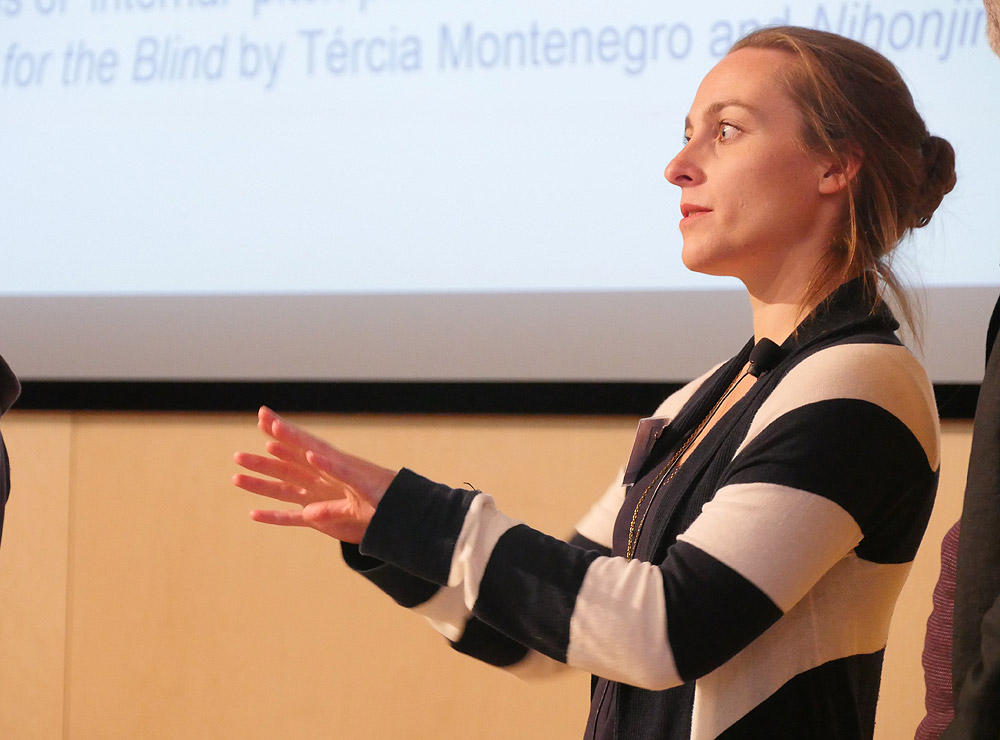
What is it like to be a ‘newcomer’ watching translators work? How do you translate one text as a group? Our second blog from this year’s International Literary Translation & Creative Writing Summer School comes from WCN Programme Assistant Vicki Maitland, who sat in on a Bengali workshop led by Aruanava Sinha.
It is only when sat in a room of translators that the nuance of language and its relationship to culture is fully apparent. I was lucky enough to sit in on the second session of a group of Bengali translators, led by Arunava Sinha. Arunava had chosen to work on a single Bengali text over the course of the BCLT Summer School. The session began where they had left off the day before and recapped the work they had completed in their own time on the previous day. Arunava read out a sentence or two of the text and then asked for the translators suggestions. The nervous pause at the beginning of the session soon fell away as debate was sparked. Was there a more concise way of expressing this sentiment? Which was more important, loyalty to the original text or a conveyance of equivalent meaning? Was there an English word or phrase which could accurately mirror the Bengali colloquialism? Arunava fielded these questions to the group, allowing them to debate and discuss before introducing his own opinion, formed from years of experience.
As a newcomer to the world of translation, this dissection of the text was fascinating. I suppose I had always known that translating a novel was about far more than creating a word-for-word copy of the original, but to see the nuances of language and culture played out in front of me was remarkable. What struck me even more, however, was the fact that the work of these several translators was happening all at once in Arunava’s mind. It was clear that to be a successful translator you had to consider multiple translated interpretations of the text almost simultaneously before deciding on the most appropriate version. Arunava appeared to negotiate this with ease; whilst the young translators in front of him thrashed out multiple variants of near identical phrases, he gently steered the group towards consensus. Whenever the group hit a rut with the original, they would turn to the author of the text, who was also sitting in on the session, for greater clarification. He would reflect on his choice of phrasing in the original and its implications for the plot of the novel as a whole, allowing the group to reach their conclusion with confidence.
At the end of the session, the group had only moved a couple of paragraphs through the novel. However, although the start and end point were not far removed in physicality, the journey had been enthralling to witness.
About the Summer School
The Summer School, delivered by the British Centre for Literary Translation in partnership with Writers’ Centre Norwich, brings together writers and translators for an intensive, one-week, residential programme of hands-on translation and creative writing practice.
For language-specific workshops, groups work on a collaborative translation with the author in residence and workshop leader. For translators working from any other languages there are two multilingual workshops, one for poetry and one for prose. These are designed for translators working from any language into English.
All workshops are designed to encourage collaboration and peer learning in a small group setting.
During the week, the workshops will be complemented by plenary sessions, which will have a particular focus on the publishing industry, and how publishers and translators work together.
You may also like...

Non-fiction in many forms: a conversation with Erika Clegg
In this case study, non-fiction writer Erika Clegg answers our questions on her research techniques, motivations, inspirations, creative process and harnessing her life experiences.

3rd November 2026
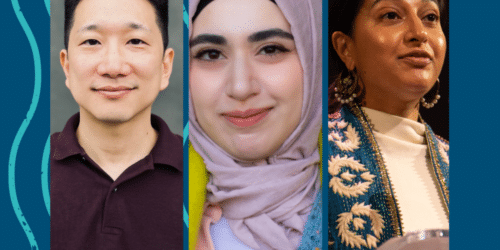
Watch ‘Who Represents the Translator?’
Watch translators Anton Hur and Sawad Hussain in conversation with Ecre Karadag as they deep-dive into representation and the many kinds of labour that surround literary translation.
30th October 2026
‘A Street Through Time’: a new teaching resource for the KS2 History and English curriculum
We are delighted to introduce ‘A Street Through Time’, a new cross-curricular teaching resource designed to support Key Stage 2 History and English learning.
13th October 2026