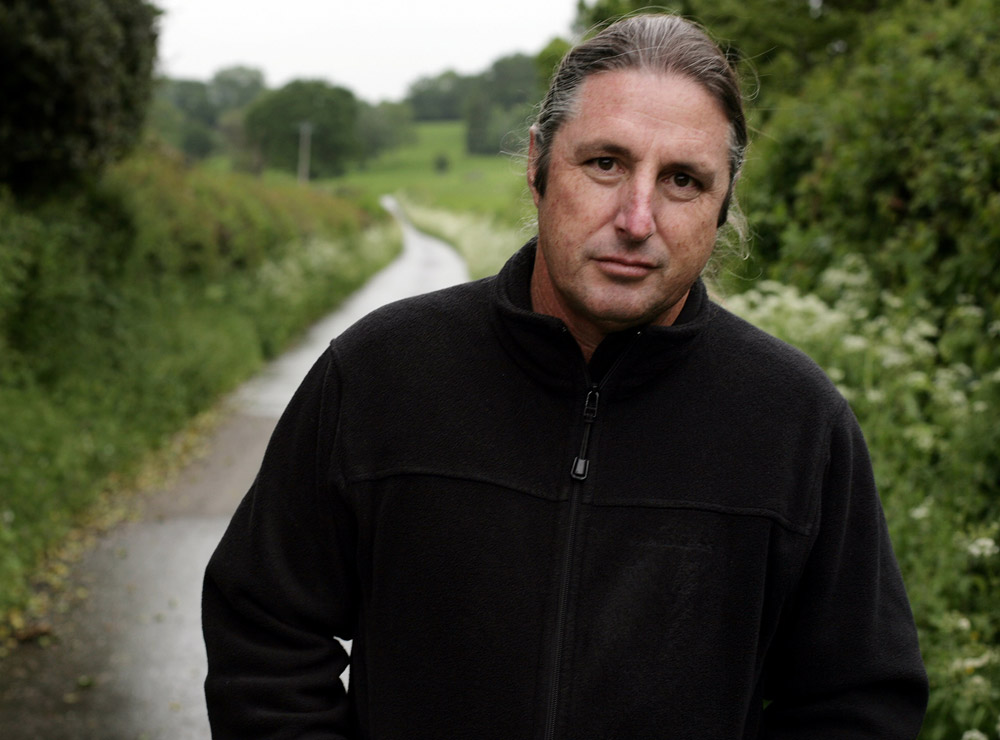
Tim Winton is one of Australia’s most esteemed novelists. He has published 28 books for adults and children, and his work has been translated into 28 languages. We’re thrilled that he is joining us for the City of Literature programme at Norfolk & Norwich Festival in May, for a conversation about his latest book The Boy Behind the Curtain with award-winning Anglo-Australian writer Evie Wyld. For those who aren’t already familiar with his work and the fantastic scope of his career, our Communications Intern Laura Jamieson provides you with her five favourite facts to get you started.
Tim has won the prestigious Miles Franklin Award a record four times.
The Miles Franklin Literary Award is Australia’s most prestigious literature prize. Tim first won the award in 1984 for his novel Shallows, which is set in the fictional town of Angelus, Weston Australia – the last remaining remnant of Australia’s whaling industry. He went on to win the award again for Cloudstreet (1991), Dirt Music (2002) and Breath (2009). He has also been shortlisted twice for the Man Booker Prize (The Riders and Dirt Music).
He’s done a lot for the environment.
Winton’s dedication to the Australian landscape has been recognised by leading Australian organisations. A patron of the Native Australian Animals Trust at the University of Melbourne and the Australian Marine Conservation Society, Winton’s love of the environment can be traced back to childhood. Well-travelled, Winton spent his childhood on the outskirts of Perth before moving to Albany, Australia’s last whaling town. A childhood spent amongst the Australian wildlife and in the water, the landscape’s dominant role in his writing bears inspired love of rural Australia.
He is a ‘national treasure’.
The National Trust of Australia has named Winton as a ‘National Living Treasure’; an exclusive list of 100 Australians who have made outstanding contributions to Australian society. He has also been awarded the Centenary Medal for service to literature and the community, and was made an ‘Australia Post Australian Legend’ for his outstanding contribution to the social and cultural life of Australia. Phew!
‘I don’t know if I’m an activist writer or just a writer who has an activist life on the side’ (The Guardian)
…he even has a fish named after him!
Winton’s passion towards the Australian environment and influence in Australia has been rewarded in the scientific field – in 2016 a new species of fish discovered in the Kimberley, North Western Australia, was named after Tim Winton himself. Credited as being a champion of the Australian environment and conservation, Winton was honoured to be recognised in the discovery, adding the naming of the fish to his many list of recognitions.
His latest book documents his remarkable life.
Winton’s latest novel, The Boy Behind The Curtain, is an autobiographical collection of short stories documenting his remarkable life. Having lived in both Australia and Ireland, with his family joining the Mormon Church of Christ when he was a boy, The Boy Behind The Curtain is a truly unique reflection on the moulding of life. The book is currently on the longlist for the 2017 Indie Book Awards – Nonfiction.

You may also like...

Writing ‘Ghostland: In Search of a Haunted Country’
In this article, writer and NCW Academy tutor Edward Parnell shares his experience writing his mixed-genre book ‘Ghostland: In Search of a Haunted Country’.

29th February 2024

Top tips for submitting your writing to publications
Submitting your stories to competitions and publications can be exciting, time-consuming and nerve-wracking. In this article, writer and NCW Academy tutor Benjamin Johncock shares his top tips to help your work stand the best chance of success.
2nd February 2024
The Full Story: Find out about Megan Bradbury’s mentoring intensive
In this article, writer and NCW mentor Megan Bradbury answers questions about her 12-month mentoring intensive, discusses the positive impact mentoring can have on your writing and shares her top tips for writers who are struggling with a creative block.
25th January 2024