


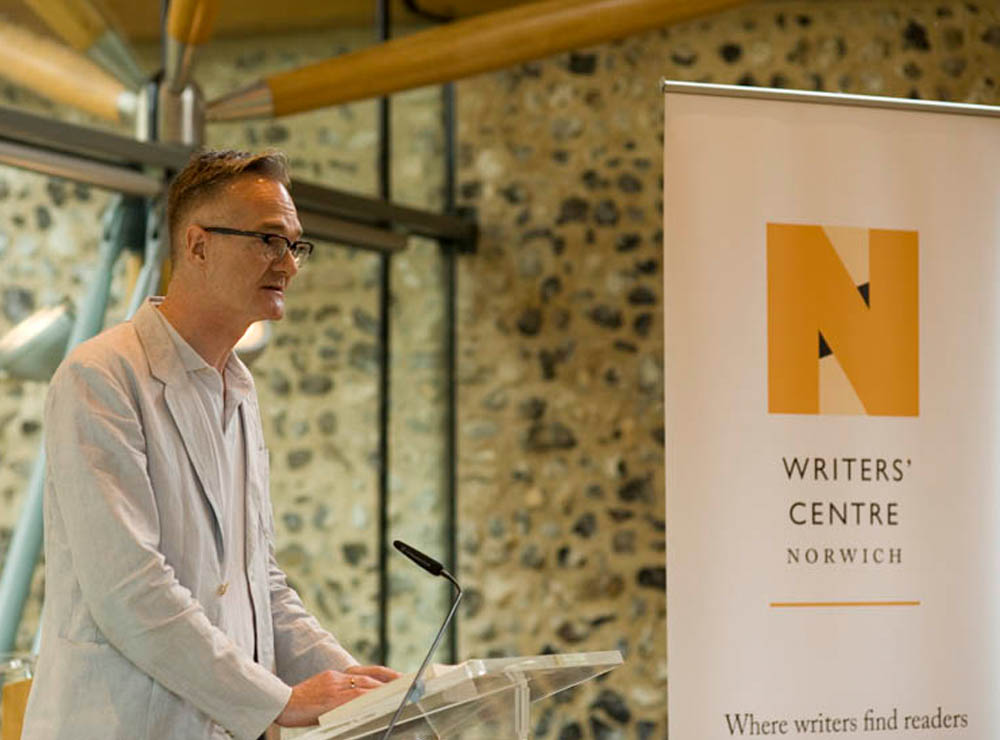
For the third Salon, Marcel Möring gave a provoking introduction, rousing writers in defence of the literary novel.
His terms were clear. The novel is under attack. This form which is the story of how it all began is us and we are it. Novelists listen to the heartbeat of time, and so their work is urgent. Novelists need to give people not what they want, but instead what they might least expect. They need to make art.
Möring states that the novel has come to a standstill and that novelists just seem to have accepted this.
He finished by rousing the assembled writers. Let us be bold and daring. Let’s risk it all and get back to the point whereby we ourselves are shocked by literature. Let’s mess with time and place and the idea of the text. Let’s be free and experimental. Let’s make art.
Novelists are the mothers and fathers of narrative invention. They have an obligation and must try to go where no man and no woman has gone before.
There was general agreement from the writers gathered that there is indeed a crisis in the novel form. The market has become constricted and now publishers are not taking a chance on experimental forms of novels, writers are being herded towards the familiar.
Has the European novel sold its soul and become a commercial tool of bog-standard storytelling? It might have. Yet is this just an Anglo-American disease? The novel in English may be doomed, but this doesn’t necessarily hold for all novels.
Those writing in other forms noted Marcel’s insistence on the novel being the ultimate literary form. Maybe the most interesting literature is happening outside of the novel now. Would that be such a bad thing?
A poet noted that of course it’s worthwhile to look for something new in the novel; poets are constantly searching for the new. If novelists become really experimental and break down all of the boundaries in the novel, maybe they’ll end up writing poetry!

You may also like...
What it means to write about disability: Anaïs Van Ertvelde on representation & liberation
In this episode of The Writing Life Podcast, Anaïs Van Ertvelde explores what it means to write about disability through her essay collection Handicap: Een bevrijding (Disability: A Liberation).

2nd November 2026
Watch ‘Who Represents the Translator?’
Watch translators Anton Hur and Sawad Hussain in conversation with Ecre Karadag as they deep-dive into representation and the many kinds of labour that surround literary translation.
30th October 2026

Writing across the world: Dieter Rogiers on research & international settings
In this episode of The Writing Life Podcast, Dieter Rogiers explores how place shapes his writing, discussing both the locations where he writes and the international settings of his novels.
19th October 2026