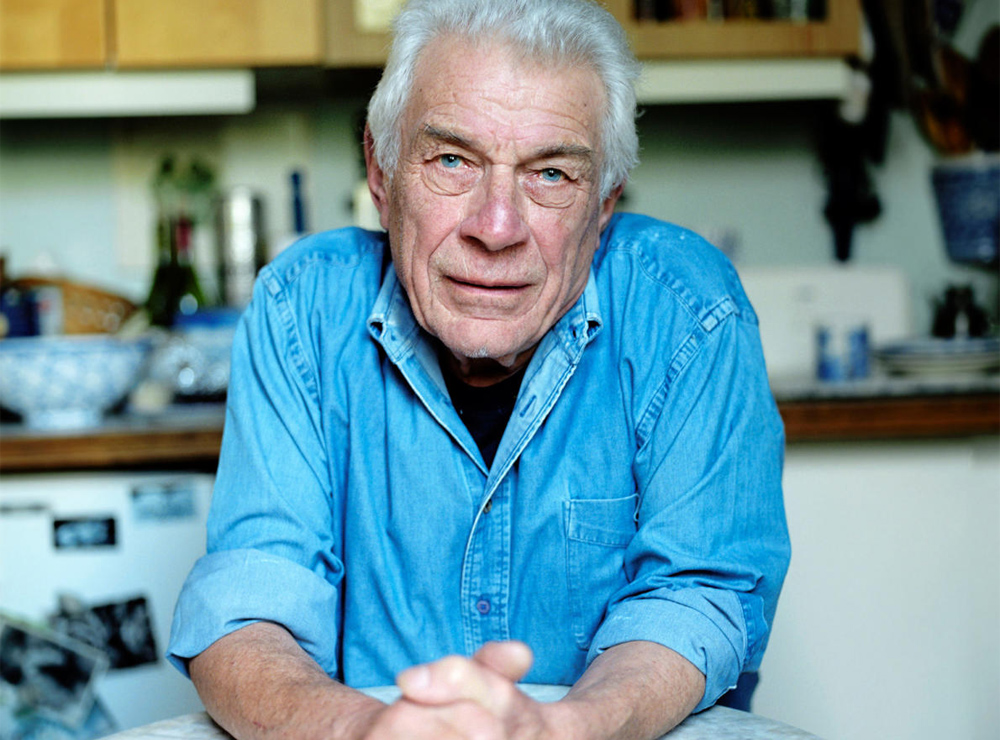
John Berger, the Booker-prize-winning novelist and visionary art critic who defined a generation’s perception of visual art, passed away aged 90 on 2 January 2017. We’re looking back at some of his most inspirational quotes – and looking forward to our event in his honour at Norfolk & Norwich Festival this May with John Christie, Gareth Evans and Michael Dibb.
‘When we read a story, we inhabit it. The covers of the book are like a roof and four walls.’
‘Those who first invented and then named the constellations were storytellers. Tracing an imaginary line between a cluster of stars gave them an image and an identity. The stars threaded on that line were like events threaded on a narrative. Imagining the constellations did not of course change the stars, nor did it change the black emptiness that surrounds them. What it changed was the way people read the night sky.’
‘The strange power of art is sometimes it can show that what people have in common is more urgent than what differentiates them.’
‘Every city has a sex and an age which have nothing to do with demography. Rome is feminine. So is Odessa. London is a teenager, an urchin, and in this hasn’t changed since the time of Dickens. Paris, I believe, is a man in his twenties in love with an older woman.’
‘The relation between what we see and what we know is never settled. Each evening we see the sun set. We know that the earth is turning away from it. Yet the knowledge, the explanation, never quite fits the sight.’
‘The past is the one thing we are not prisoners of. We can do with the past exactly what we wish. What we can’t do is to change its consequences.’
‘You painted a naked woman because you enjoyed looking at her, put a mirror in her hand and you called the paintings ‘Vanity’, thus morally condemning the woman whose nakedness you had depicted for your own pleasure.’
‘One can say of language that it is potentially the only human home, the only dwelling place that cannot be hostile to man.’
‘At times failure is very necessary for the artist. It reminds him that failure is not the ultimate disaster. And this reminder liberates him from the mean fussing of perfectionism.’
‘I can’t tell you what art does and how it does it, but I know that art has often judged the judges, pleaded revenge to the innocent and shown to the future what the past has suffered, so that it has never been forgotten.’
You may also like...

Writing ‘Ghostland: In Search of a Haunted Country’
In this article, writer and NCW Academy tutor Edward Parnell shares his experience writing his mixed-genre book ‘Ghostland: In Search of a Haunted Country’.

29th February 2024
‘The Meaning of Geese’ wins East Anglian Book of the Year 2023
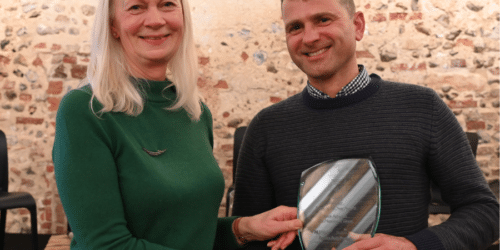
The debut book from Norfolk conservationist Nick Acheson is crowned the overall winner of the East Anglian Book Awards
16th February 2024