


In this episode of The Writing Life Podcast, bestselling novelist Isabel Allende shares insights into her creative process and craft, as outlined in her latest book Storytelling – a profound exploration of the art and magic of writing.
Image © Lori Barra
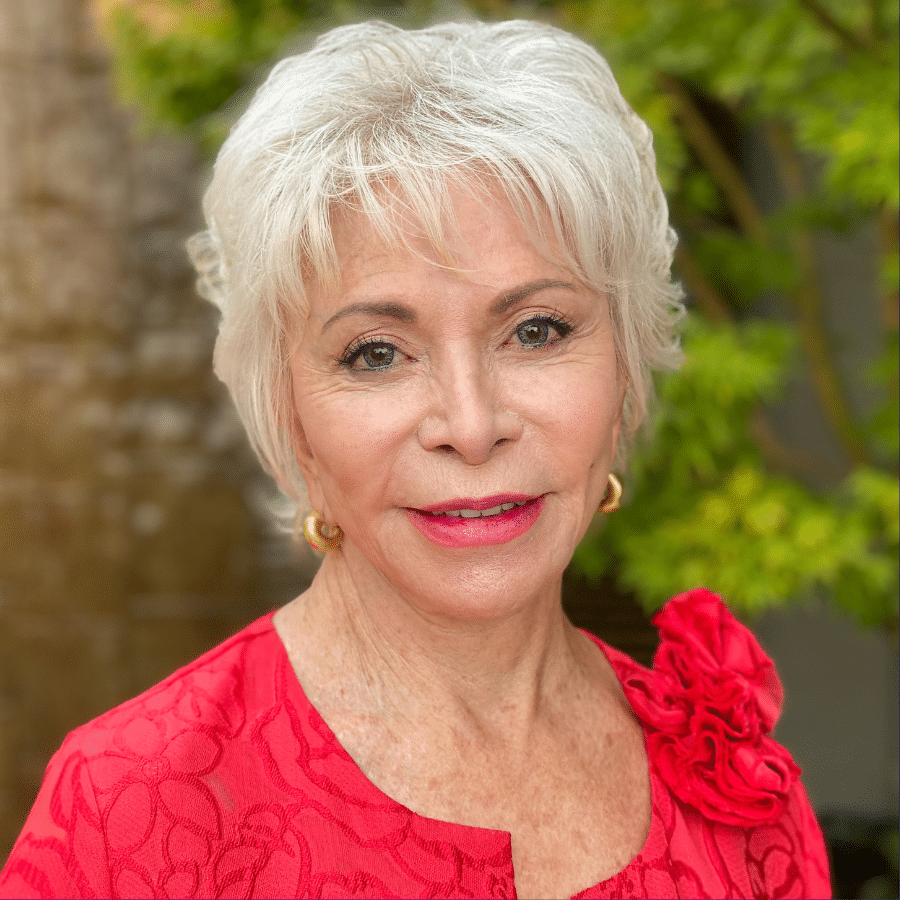
Isabel sits down with NCW’s Holly Ainley to reflect on what it means to be a writer, and the role that writing plays in shaping her life and identity. Together, they explore how to navigate self-criticism as a writer, the importance of creating complex, three-dimensional characters, and developing an authentic voice as a writer.
Isabel Allende, born in Peru and raised in Chile, is a novelist, feminist, and philanthropist. She is one of the most widely read authors in the world, having sold more than eighty million copies of her books across forty-two languages. She is the author of several bestselling and critically acclaimed books, including The Wind Knows My Name, Violeta, A Long Petal of the Sea, The House of the Spirits, Of Love and Shadows, Eva Luna, and Paula. She has received fifteen honorary doctorates, been inducted into the California Hall of Fame, and received the PEN Center Lifetime Achievement Award and the Anisfield-Wolf Lifetime Achievement Award.
Listen now
Edited by Omni Mix
Storytelling
Allende has been writing for over fifty years, and has sold more than seventy-seven million books. Through writing her twenty-one novels, she has developed unique strategies that have helped her surrender to the process of writing, and create distinct characters and legendary plots in the way that only Allende can. These techniques will help any aspiring writer; and now, they can help you.
In Storytelling, you will discover how to overcome fears of getting started, embrace the mysteries of magic and life in your work, feel the power of your own stories – because how can you expect to move a reader if you, the writer, aren’t moved? – and find your unique voice.
If you’re a writer – or any kind of creative – seeking guidance and inspiration, this will help you unlock your potential. If your greatest desire in the world is to create, Storytelling will lead the way.

Transcript
Holly
Good morning, Isabel. Welcome to The Writing Life. And what an honour it is to have you as our guest today. Thank you so much for joining us.
Isabel
Thank you, Holly, for having me.
Holly
Well, let’s get stuck in.
So, this autumn, you’re bringing us, your readers, a brand-new book, like none other than we’ve seen from you before, actually.
For the first time in your publishing career, which I think spans over 50 years, you’ve chosen to share your wisdom and your experience on the art and craft of storytelling itself.
Why now for this unique book? Why now for committing your expertise and guidance to the page?
Isabel
It wasn’t my idea at all. The BBC has a masterclass thing, and they had one class with me called Magical Storytelling: 21 Lessons.
They came to my office, like 16 people, and they took all the furniture out. And for a week, they sat me on a chair, always the same chair, with the same clothes, the same hairdo, so that it would look like one take. But it really took a week.
And they asked about the craft. I didn’t have to prepare anything. For example, they would say, ‘How do you develop a character?’ And I would just tell them the way I do it, in a very natural way.
And then, when that was done, I thought, well, I have the copyright of all this material. It’s my experience. But then I realised that I couldn’t use it because they published the class and a manual. It was not mine anymore.
But then I thought, well, that’s about the technicalities of writing. I want to write something about the philosophy, the experience, the emotion that is behind all this. Why do I do it? Which is very different from how I do it.
And so that’s how this little book was born.
Holly
Well, I’m so glad that you decided to do it because, I mean, it very much is, as you say, it’s about the philosophy of writing. It also has a lot in there about, I think, the writerly identity.
But there is also some really amazing expertise in their own craft. And I think if writers are looking for pearls of wisdom, they’ll find it.
So, you must have learned so much, though, about your process throughout your career, I guess, consciously, and perhaps things that you do without thinking. So, how did you go about kind of organising and distilling all that down for the book? You know, how do you summarise what it takes to be a good writer?
Isabel
I didn’t plan it. I just thought of it as a conversation. I get a lot of messages and emails from aspiring authors or people who have been writing for a while and they are stuck, or they have begun something years ago and now they want to pick it up again. And they ask me how to do it. So it was more a conversation.
And when it was done, I organised it. I divided it into chapters and organised it. And then my American editor, Jennifer Heckin, said, ‘You need to add at the end of every chapter a few tips for the reader,’ which I didn’t want to do because I thought it would look like a self-help book. But she insisted, and I think she was right.
Holly
Do you feel good about them now?
Isabel
Yeah.
Holly
Yeah, I think it’s really, really interesting, the format, because each section begins with a very inspiring quote from another writer. And then it goes into as much about you as it is about craft, I suppose the two things are integrated. And then, as you say, it finishes with those tips at the end.
And so there’s a central strand, though, that runs through the book about the act of writing itself, isn’t there, and what it means to you. And I picked out a few descriptions that you made of writing. So, variously, you say it’s like alchemy. It’s like a meditation for you. It feels like an addiction. And it’s the thing that helps to give meaning to your life.
So I want to ask, what is it that writing allows you to do that you can’t access elsewhere in your life?
Isabel
I think that in 45 years of fiction writing, I have created a sort of world, the universe in which I feel comfortable and free.
Because of the kind of life I have had, I’ve always been displaced. As a child, I was the daughter of diplomats. Then I have been an exile, an immigrant, always moving, starting again from scratch, leaving people and places behind.
And in the writing, I am rooted. In the writing, I find my home. So, for me, it’s much more than just the love of the process, which is very important.
Right now, for example, I finished a book and it’s in the hands of my editor. And I’m idle. I painted all the doors in the house blue. And I painted a wall mango colour. I regret it, but it’s done.
So, I need the writing to ground me, to keep me busy, to engage me. And the story becomes more important than anything. I have it in my head. I dream about it.
I am happy. I have this little room here where I’m talking to you. That is my little space. And I have a sign at the door, and when I put the sign out there, nobody knocks at the door.
I can spend eight hours here and I forget about eating. I forget everything, because this is a wonderful world.
Holly
It’s really interesting to hear about how you write now, and your sort of routine now when you have a book on the go.
But I was really interested to read in the book that it wasn’t until you had had, I think, two novels published and you were making enough money to live from your fiction writing that you actually dared to call yourself a writer.
And, looking back, do you think that’s fair on your younger self? Would you so hold yourself to that same standard today?
Isabel
Look! The first thing that my agent said when she received the manuscript of my first novel, she said, ‘Don’t quit your day job, because you won’t be able to make a living as a writer. Very few people do.’
And I have 32 books in 42 languages, and I can support myself and my family, but that’s rare. And I was very much aware that I had to feed my kids.
So, I didn’t quit my day job until I had three novels out there, already translated. And then, hesitantly, I did, because I wasn’t sure if I could continue writing or being published.
And I look back and I say, that was what I had to do. I could not have quit my job any time before, and I could not have called myself a writer before I could support myself as a writer.
So, I think it was okay.
Holly
Yeah, but you wouldn’t look back and say, though, that you were a writer the moment you started writing? Do you feel like it was connected, for you, to that kind of very public acceptance?
Isabel
It was a very practical thing.
Yeah, because I had been a journalist. I had been writing all my life. But when you write literature, it’s a completely different world. Then you have to deal with the book industry, that is complicated and very difficult for new writers. It’s not easy at all.
I remember what Elizabeth Gilbert said. She was on stage and someone asked this question, and she said, ‘Don’t expect your writing to give you fame or money.’ Right? Because you love the process. And I would add, don’t even expect to be published. Write because you love the process. But that doesn’t make you a writer.
A writer is a person who dedicates his or her life to writing.
Holly
That’s so interesting, isn’t it? That there’s that association there with income, perhaps.
Isabel
Treat it like a job, not like a hobby. Then you are a writer. Maybe you can’t be published. Maybe you can’t make any money, but if you dedicate your life to that. You are a writer.
Holly
Yeah, that’s so interesting. But what’s also really interesting is there, you saying that writing for you is about, I guess, safety. It’s an anchor. You said it roots you, it grounds you, and yet it was something that you had to wait for.
You had to wait for until you had these three books out there.
Isabel
I had to wait to call myself or consider myself a writer. But also, I had to wait many years to begin writing fiction. I was almost 40 years old when I wrote my first novel.
Before I had written as a journalist, but I couldn’t even consider becoming a writer before because my life was just hectic.
I had to support a family, but also we were living in exile, in a country that we had to adapt to. It was hard.
Holly
Do you think if you had stayed in Chile, where obviously you were working as a journalist, that you would have written fiction?
Isabel
I don’t know. I think that the desire to create stories always was in me. But I was a very happy journalist. I loved that.
And if I could have continued doing that, probably today I would be a retired journalist with lovely memories of what I did during my life.
I don’t know if I would have been writing fiction. My first book was an exercise in longing. I tried to recover everything I had lost when I left my country. So it was a story about my family and my country.
Holly
Famously, that book, I think you’ve talked about before, it didn’t begin—you didn’t intend for it to be fiction, for it to be a novel. It began as a letter. Is that right?
Isabel
Yeah. The House of the Spirits began as a letter to my grandfather, who was dying in Chile, and I could not go back to say goodbye to him.
And then, after, I don’t know, a few paragraphs, I knew that this thing was something else, that it was going in a wild direction, and I just kept writing. I didn’t have a plan. I didn’t have an outline. Nothing.
I just brought in my relatives, who were all crazy. I mean, with a family like mine, you don’t need to invent anything. You can be a born writer with a family like this.
So it was just telling about the stories I had heard all my life and remembering my country.
Holly
It’s really interesting, that distinction you’re making about the nature and perhaps the power of fiction, as opposed to nonfiction, whether that’s journalism, as you were writing, or whether that’s narrative non-fiction.
It’s something you talk about in the book. Non-fiction is the domain of writing that can deliver a specific message or perhaps it can intentionally try to help people, but fiction, you say, has this sort of greater purpose for preserving our collective human experience, which is beautiful.
I wonder if you could talk a little bit more about that quite clear distinction that you make between non-fiction and storytelling, and I guess how that links to your own writing.
Isabel
When I write fiction, I’m very careful not to deliver an obvious message. If there is a message, it’s between the lines because of the actions of the characters, the nature of the story.
Why have I chosen to tell a story about slavery? Because I care about that. But I’m not trying to preach abolitionism. I am just telling the story of a slave.
When I write non-fiction, then I can do whatever I want, in that sense. In a memoir, I can say whatever I want, but it has…
The thing is that, with non-fiction, you have to stick to the facts. With fiction, you can go crazy. It doesn’t matter because you own the story. You can turn it around, do whatever you want. You can lie.
Fiction is a pack of lies. Wonderful lies, but that’s what it is. I tell the reader, ‘Hey, I have this thing that I’m going to tell you. And it’s not true. But we will pretend, you and I, for a while, that it is true.’ And the reader has to surrender to the fact that it is a pack of lies, and we will both delve into that.
But with non-fiction, no, I have to present the facts and stick to them. So, for me, writing a memoir is very hard. I’m a very good liar.
Holly
Yeah, so you prefer writing fiction?
Isabel
Of course, of course I do.
Holly
But I’m intrigued, though, about the lies. Of course, I understand what you mean, but I think there’s something in the book as well about fiction being able to get to a different kind of truth, okay, not an empirical truth, but a kind of heart of a story that readers can really connect with.
Would you agree that there is a different kind of truth, perhaps, that writers can find?
Isabel
Absolutely. The reader is always touched by something that is true, that sounds true, because it is.
So, if I’m writing, let’s say, again about slavery, we agree that slavery existed, and it was brutal, and it is—it still exists. Horrible. Absolutely horrible. We agree on that.
And we construct a story upon that basic truth. If I write a novel in which slavery is depicted as something tolerable, and it’s okay, and like some people still today believe in the United States, it’s not true. It’s basically not true.
So, it’s a very dishonest way of presenting a story. So, I think that every story has to have a basic truth.
Why I can’t write romance novels? Because I don’t believe in that kind of romantic situation in which a beautiful woman with big breasts and green eyes meets an executive in a Polynesian island, and they have this passionate, passionate love affair that ends in marriage.
I don’t believe in that thing. So, if I wrote it, it would be totally fake.
But if I write about a blind girl that is separated from the mother at the border and sent to a detention centre in the United States, that’s true. And I can create a story about something that is basically true.
Holly
And I guess you learned that by developing your own style and your own voice.
There’s a lovely description in the book where you talk about knowing that when a novel has taken off, and feeling like you can just relax then and trust the process. So I guess there’s some innate knowing with writing when it’s good or when it’s good enough.
Isabel
I don’t think you even know when it’s good, but I know when it has a life. And that’s when the characters surprise me. When I can see them, they come to this room where I am and they interact with me, and they have their own lives, and I can’t force them to do something that goes against their nature.
And I try sometimes. I love the happy endings. But then I say, if that’s impossible, it wouldn’t happen to these people.
And so I’m forced to do things that maybe I don’t want to do because of the nature of the characters or the nature of the story. And that is fascinating.
Because I feel that the story exists. And my job is to tune into it like a radio. I have to tune into the story that is in the air and tell it to the best of my knowledge.
Holly
That’s such a brilliant metaphor for it. And I’d love to ask you a bit more about character then, now we’ve arrived here.
Because what’s so thrilling about the book is these very personal insights that it does offer into your process and into your craft. And I mean, I don’t think that’s something all experienced writers would be willing to share. I think you’re very generous in detailing all that you’ve learned.
And you’re very honest about moments of real learning as well, when things haven’t gone to plan.
But characters, of course. There are some indelible characters in your work. And there’s this really brilliant anecdote that you share about it. It’s actually about the first play that you ever wrote, which is obviously a very different form to fiction, but it taught you something about creating rounded characters. I wonder if you could share that anecdote with us.
Isabel
Yeah, I wrote a play that was about an ambassador that is kidnapped. This is the ’70s, the time when this was happening in Latin America. He’s kidnapped by some guerrillas to exchange him for political prisoners. That’s the play, and it all happens in a basement between three guerrillas and the ambassador.
When the actors sat around a table to read their parts, I realised, to my horror, that everybody spoke like me. Everybody was me. And it was just so shameful. I was so embarrassed. I picked up my script and went home and redid the whole thing, rewrote everything, trying to put myself in the place of the poor actor that would have to represent that lousy character.
And that taught me that I have to become the character and imagine all the character’s life, even if it appears for a little moment in the book or in the theatre, on stage. I have to be that person completely, with all this complexity and contradictions, in order to create a character that is rounded, that is real, that is not a caricature.
I learned that in the theatre. The actors taught me that. And then afterwards, when I had already rewritten the whole thing, when they read it again, again, I felt, ‘This is not right.’ Because although they are not me, I can’t see the worker, I can’t see the student, I can’t see the woman who has been tortured. I can’t, because they’re all, in a way, blended together.
I have to do it again. And I do that when I write a novel. Sometimes I start a novel and I realise that two or three characters have been so diffuse that you can’t see them clearly. And unless I can smell the character, I’m not happy.
Holly
Gosh. Yeah, that is such a visceral, very Isabel Allende way of relating to your characters. Something very vivid and very physical.
Isabel
But you know what? For me to create a character that is real, three-dimensional, I need a human model. I need someone that will inspire the character.
If I just create it out of my head, most probably it will be a caricature, because all my prejudices or all my ideas about how someone who is, for example, a soldier should be would be there. And maybe that’s not at all how a soldier really looks or acts.
So I need to look for a real person that will inspire, serve as a model and teach me.
Holly
And yet there’s also this image you paint of when you first start a novel, imagining those, well, I suppose perhaps they are characters then that you’ve taken from your real life. And then you’re imagining them in a dark room, I think you describe. And little by little, they sort of become illuminated, again, a very vivid description.
Is that a technique?
Isabel
When I start a novel, I don’t have an outline. I have a very, very vague idea of maybe where it’s going. That’s why I love historical novels, because at least I have a place and a time that I have researched.
But if it’s not a historical novel, I don’t have anything. So I come to my office on 8 January, and it’s a dark room. And I start wandering around with a candle to see what isn’t there. Where is the story? How can I tune into the story? Who are the characters?
And I have the feeling that, as the days go by and I show up in front of my computer every single day for many hours, although I know that what I’m writing will be deleted the next day, it doesn’t matter. It’s part of the process. It’s the training. It’s getting into it.
It’s coming into the dark room and slowly finding out what’s in there.
And then, as the weeks go by, you start seeing these people. And you have a clearer idea of what the story is about, and then everything opens up, and it’s just fascinating. I love that.
Holly
And that’s the fun part.
Isabel
That’s the fun part, of course. But you know, the fun part is the beginning.
And then there’s the middle, in which often the story sort of falls apart because you have already introduced the characters, introduced the story. And then what? And then it becomes sort of mushy, the whole thing.
That’s the hard part for me, the middle part. Because then, at the end, you have to resolve the whole thing, and then that’s fascinating too.
Holly
And what do you do in those moments when things get a bit mushy? How do you keep your motivation?
Isabel
I skip. I skip. For example, if I’m stuck in a part because it’s just boring or flat or whatever, and I can feel it. I can feel the writing getting flat.
Yeah. I skip it and I go to something else, and then I come back. And if I come back to a scene or to a part for the third time, and if it still doesn’t work, it shouldn’t be there. I take it out.
Holly
The rule of three.
Isabel
The rule of three, yes. It’s like husbands. Look, if you have three husbands, probably you shouldn’t be married. And that’s my case, you know. I have been married three times, and I’m 84 years old. I always say that this is probably not the last time.
Because if I live long enough, I will have another husband. But then I think about it and I say, no, if you have had three, enough is enough.
Holly
I just wanted to pick up on a few things there. The first that you mentioned, 8 January, and I know that this is a question you’re asked probably every time you’re interviewed, but why 8 January?
Isabel
Look. I started my first book on 8 January, which was the day that we got the phone call from Chile. I was in Venezuela that my grandfather was dying. But also I was working in a school, I administered a school, so it was also a time of holidays. I wasn’t working that week precisely. So it was a good time. And it’s winter, so it’s a more and more reclusive time.
So I started my book that day, and The House of the Spirits became a success in Europe in a matter of two weeks. The book had been bought by almost every publisher in every language in Europe. And then it became this huge success. So, such a lucky book.
That I thought, this is just a stroke of luck. It’s never going to happen again. But just in case, for Kabbalah, let’s do 8 January again for the second book.
And it also went well. So now I can’t change it, because what if I change it and then it’s a flop? Probably will be a problem.
But also, it is discipline, Holly, because my life is complicated. I need to have a day to start, and I need to clear my calendar to have several months in which I don’t travel, in which I am really with the story. And that, having a day to start, helps. Here’s my brain.
I prepare emotionally, intellectually. I prepare my office, I prepare the research. It’s necessary for me more and more.
So now that I have finished a book, it’s August, and I know that I still have to do some editing for the other book, and there is a translation that I have to check, many other things. But I want to start writing again, and I wait. I wait until 8 January, and in the meantime I’m turning these characters in my head and thinking, what are they going to do? Who are these people? How do they look?
But I can’t write. Not a word. Because it would jinx it.
Holly
But 8 January, you give yourself permission. That’s brilliant.
Isabel
But also, everybody else around me knows that I’m not available anymore. And that helps, you know.
One thing that aspiring writers, new writers, find so difficult is to have what Virginia Woolf called ‘A Room of One’s Own’. And I insist that the room of your own is in your head. You don’t need a physical space as much as you need a space in your head in which the story lives. That’s the room of your own.
And to have that, you need discipline more than inspiration.
Holly
Yeah, it’s interesting, isn’t it? Because having that discipline not only helps you to actually write, to get the words down on the page, but I think something else you address, which is so relevant to writers, well, to new writers and established writers, is this sense of sort of dealing with critics.
And oftentimes that’s an inner critic. I think, obviously, once you’re published, there are then external voices as well, book reviewers and your readers.
But what advice would you give to aspiring writers for dealing with that inevitable sense of self-criticism?
Isabel
I would say, tell the critical voice to fuck off until the book is finished. Write a bad book. It doesn’t matter. You can write a bad text, and you can correct and edit and make it good.
But a blank page you can’t correct. So just do it. Tell the story, and we will see how we can fix it later. And don’t allow the critical voice at the beginning, because that will stop you.
Write a bad book. Doesn’t matter. But write. And then the critical voice is really important for the editing. But you probably, at that stage, can find some help: a good editor or a coach or a course or workshop. There is help. But first you have to write the story.
Holly
So it’s perhaps if you stop expecting to get it right, then you can stop being afraid.
Isabel
Yeah, I was teaching long narrative at the university, and I had never taught before. So I asked my daughter to help me because she knew what to teach.
So she came with me. And before we entered the classroom for the first time, she said, ‘Tell your students to write a bad book.’
I said, ‘What are you talking about, Paula?’
She said, ‘Yes, that will free them. If you are expecting to write the great American novel, you will never start. But if you just want to tell a story, sit down and tell it, and then we’ll see.’
Holly
And it turned out to be a brilliant piece of advice, I’m sure, to many writers.
So another thing that I feel like we’ve been talking a lot about is how you find your voice, how you find the truth. We’re back to truth again, I guess, how you find a way of storytelling that feels very true to you.
But I think, again, that’s something that writers early on in their careers struggle with: developing an authentic voice. And you have a chapter on voice, and we know that your voice is so recognisable. How did you know early on that that voice was taking shape? How did you sort of have that trust that you weren’t, as you say, kind of trying to tell a story that was perhaps more by numbers or felt insincere?
Isabel
I think you develop a voice by writing in time. You don’t have a voice, and it’s a very particular voice in your first book. Now, it develops along the way.
You know, now there’s so much help with AI, and people are saying, well, all the books will look alike because writers will have this wonderful resource. I don’t know how that will help.
But I think that a voice, to me, it’s about how you talk in real life.
I think that my daughter-in-law doesn’t want to go to see the movie. She says, ‘No, I don’t want to watch the movie. Tell me the movie.’ Because, according to her, I tell it better than the movie.
And I’m not reading, I’m not writing, I’m just telling her something. So it is the conversation voice that, to me, is the most authentic, is the one that really works.
So I imagine myself sitting in the kitchen with a cup of tea, telling the story to someone. Before, it would be my mother I would be telling the story to, and my mother would be very critical, and she would say, ‘This is awful. I don’t like this ending.’ And we would talk about it.
That’s how I imagined it. Now I imagine a more benevolent reader who will be sitting with me in the kitchen and will be more tolerant and not so critical. But the way I tell it is the same way I talk, in Spanish or in English, of course.
Holly
That’s really interesting, isn’t it? It’s like, don’t try to be something that you’re not in your writing.
Isabel
Yeah. Don’t try to use words that are sophisticated because you’ve read them somewhere or because you think so. Don’t repeat words in a paragraph. But just talk, just tell the way you would tell someone something. It’s the best way.
Holly
And I guess, while we’re talking about voice, a very different challenge, but also one that you would address in the book, also a challenge for emerging writers, is about giving voice to a book’s narrator, so the narrative voice. Very different to the authorial voice, often confused, I think.
But what advice would you have for writers on how they identify the most appropriate narrator? I mean, do you always know instinctively whether it should be first person or third person, or whose voice it should be?
Isabel
I wrote a book, Eva Luna, in third person, and it was the story of a storyteller. And when I finished the book, I felt that you couldn’t see the storyteller. You could see the stories, but not the storyteller.
And I thought, what can I do to approach the reader to the character, to the narrator, to the protagonist? And I rewrote the book in first person, and it works much better.
So, depending on the kind of book that you are writing, third person, first person can be great, very useful, but very limiting. It’s much harder.
When you are the omniscient narrator, you know everything. You know whatever every character is feeling and thinking and doing. When you write in first person, you can only tell what that first-person character sees, hears, knows, experiences.
All the rest? You can’t. So that limits the story very much.
Yeah. I think that in nonfiction, first person works really well. If you are writing a memoir, it’s usually in first person. Sometimes it’s not, and it would be great, but first person usually approaches the reader too. It makes it more conversational in a way.
I love first person for certain characters. Yeah. I have several, even historical characters, women that are outrageous. They do exactly what is not expected. They defy everything and get away with hell. That in first person is great. Much better than saying it, telling it.
Holly
Yeah. So it’s about who your characters are, it’s about, again, what feels most true for the story.
I’m going to ask you now. So you talk in the book about where your ideas come from. And they come from all sorts of places. So you’ve already said from your own life, from your own family, tiny moments that you notice, your dreams. You talk a lot about your dreams as a source of inspiration as well.
So I guess it’s a two-part question. I’ll start by saying, are you essentially saying that everything is material?
Isabel
Yes. Maybe because I have been displaced and I have had to adapt in different places and different languages, I learned to observe and to listen carefully in order to get the clues and codes of a culture or a society or a place.
And that helps because then I pay attention. And by paying attention, I get the stories.
I think that I tell it in the book, I don’t remember, but sometimes I’m in a restaurant and I overhear a conversation at the next table. And I’m listening carefully to what they have to say and taking notes on the napkin, because there might be a wonderful story there.
Holly
No one is ever safe in a restaurant with Isabel.
Isabel
And when I meet someone, my first question is, ‘Tell me your story.’ Everybody has a story.
Holly
And the second part of my question comes from the way… it’s really striking to me when you’re talking about how your ideas develop. It’s very physical. You call them seeds in the belly, and you talk about swallowing images. And so, of course, it makes us think about digesting ideas or maybe even gestation. It’s very vivid.
And I wonder if you could talk a little bit more about how physicality and that sensuality is so important to you. Because we know it’s important in your writing, but obviously it starts before that.
Isabel
When I say that I swallow the ideas, it’s because I’m listening. I’m observing. I take notes. I put the notes in a folder somewhere, and I can find them 40 years later, but they’re there, safe in a way.
And all these are seeds that I feel are in my belly, not in my brain, because I probably forget them, but they are sitting somewhere inside me.
And then I feel that one of these seeds starts to germinate, to grow and to occupy space. And I start thinking about it more and more.
And then I know it’s time to write. And by 8 January, I say, okay. This has been bothering me. This seed is ready. Let’s see what’s going on here.
It’s very, very organic and very physical.
And sometimes people say—I mean, this happens to me all the time, at least once a week—that someone says, ‘I have a wonderful story. Can you tell the story for me?’ And they tell me about their lives or whatever. Sometimes the story is fabulous. Most of the time, it’s just because they got a divorce. So, yeah.
Everybody thinks that their story is like a saga, which is not necessarily true. And I can’t write a story that is given to me like that because I don’t feel it inside.
But a good example is that when I was living in Venezuela, I met another exile, a man who had been exiled for the second time because he had left Spain after the Civil War in Spain in 1939. He lived and came as a refugee to Chile. And then we had the military coup in Chile, and he became a refugee in Venezuela, where we met.
And he told me his story. His name was Victor.
I carried that story, that seed, for 40 years inside me. And then one day, because the theme, the subject, the issue of refugees and immigrants was in the air, everybody was talking about it. It was an international issue.
I remembered. And then the seed started to grow, and I started remembering Victor. And I thought, I need to get back in touch with him.
So we connected again, and he was living in Chile, back in Chile. And then the story of his life became a book.
I could have written that story in 1976, but it wasn’t in the air. The seed was not ready. I couldn’t write it then.
I could not have written The House of the Spirits when it happened, which was in 1973. I wrote it in 1981 because the seed needed to grow inside, to mature. The story had to become important enough to write it.
Holly
Well, as I say, this book is so generously stuffed with advice and stories like that. There are so many things I could ask you about. I mean, in the book is plot, structure, genre, research, language. It’s fantastic. It’s full.
We don’t have much time left, so I wanted to pick up on what you just said, perhaps for my last question, about finding the right time to write the right story.
Because it’s perhaps a bit of a mischievous question. Early on in the book, you say that if you lived your life over, the only one thing you’d change is perhaps to start writing earlier, or writing fiction earlier.
But do you think if there had been books like yours available when you first started writing, that it might have taken away some of that freedom or that organic feeling that you describe in approaching fiction writing?
Because you talked about how The House of the Spirits, you didn’t really know what you were doing with it, but you knew something exciting was happening. Do you think that if you had been reading lots of books about technique or studying creative writing, that you would have had the freedom to write it in the way that you did?
Isabel
No, I would never have had that freedom, because what happens is that I wrote The House of the Spirits with such ignorance and innocence and total freedom because I had no expectations of any kind. I didn’t even know that I was writing a novel. I was just writing. Yeah.
That never happened again. I’ve been writing for so long, but I never had that freedom again. And I miss it. I wish I did.
On the other hand, I have never been part of a workshop. I have never taken a class. I never had a mentor. I don’t belong to the club of writers that help each other.
My writing and my life is very isolated in that sense. So I had to invent everything from scratch and learn by making mistakes.
And I’m happy that that’s the way it worked for me. But I think that if I had started writing earlier, it would have been the same way. I would have started without taking any classes, without knowing anything, because I’m a great improviser.
I read the instructions when everything else fails. And that’s true. I don’t read the manual. I never read the instructions. I just plunge into whatever I have to do and make all the mistakes and screw it up, and then I try to fix it.
That’s the way I write.
Holly
But what a wonderful example for writers who, you know, you can read all the books, you can study creative writing. Please do, it keeps me in a job.
But there’s something that we’re saying that you can’t teach, which is perhaps just doing it.
It’s just instinct. It’s building your confidence. There is no one formula for success. So take all of the tips and techniques that you can, but also do what feels instinctive for you.
Isabel
You know, it’s like, I would say, it’s like making love. You cannot be in bed with a manual and a flashlight.
Holly
Or you could, but it would be a very, very different experience.
Isabel
Maybe you can read the manual before if you want.
But once you are in bed, you have to just do it. And you will make a lot of mistakes, and it doesn’t matter. You correct them on the way.
But you cannot be making love with the text next to you, following the instructions.
Holly
So, Isabel, writing is like making love. Brilliant.
Well, I think that’s a great place to end. I don’t think we’ll have a better piece of advice on the podcast.
Isabel
Thank you, Holly. Thank you so much.
Holly
Thank you for this book. Thank you for sharing all of your wisdom and your experience. And I really urge everyone listening to go and buy a copy of this and to absorb it and to learn from it.
Thank you, Isabel.
Isabel
Thank you.
You may also like...
The craft of life writing with Fiona Mason
In this episode of The Writing Life podcast, author Fiona Mason discusses her memoir ’36 Hours’ and the craft of life writing.

23rd October 2023
Writing Short Stories with Yan Ge
In this episode of The Writing Life, writer and NCW Academy tutor Yan Ge discusses her approach to writing and editing short stories.
10th October 2023

How to Develop Compelling Characters in Your Fiction with Okechukwu Nzelu
In this episode of The Writing Life, Okechukwu Nzelu discusses the many aspects of developing compelling characters.
6th March 2023