


In this episode of The Writing Life Podcast, debut novelist Ruthy Mason shares how she explores the creative possibilities of liminality and transformation in Death Do Us – a haunting story that peels back the veil from the institution of marriage and exposes the rot underneath.
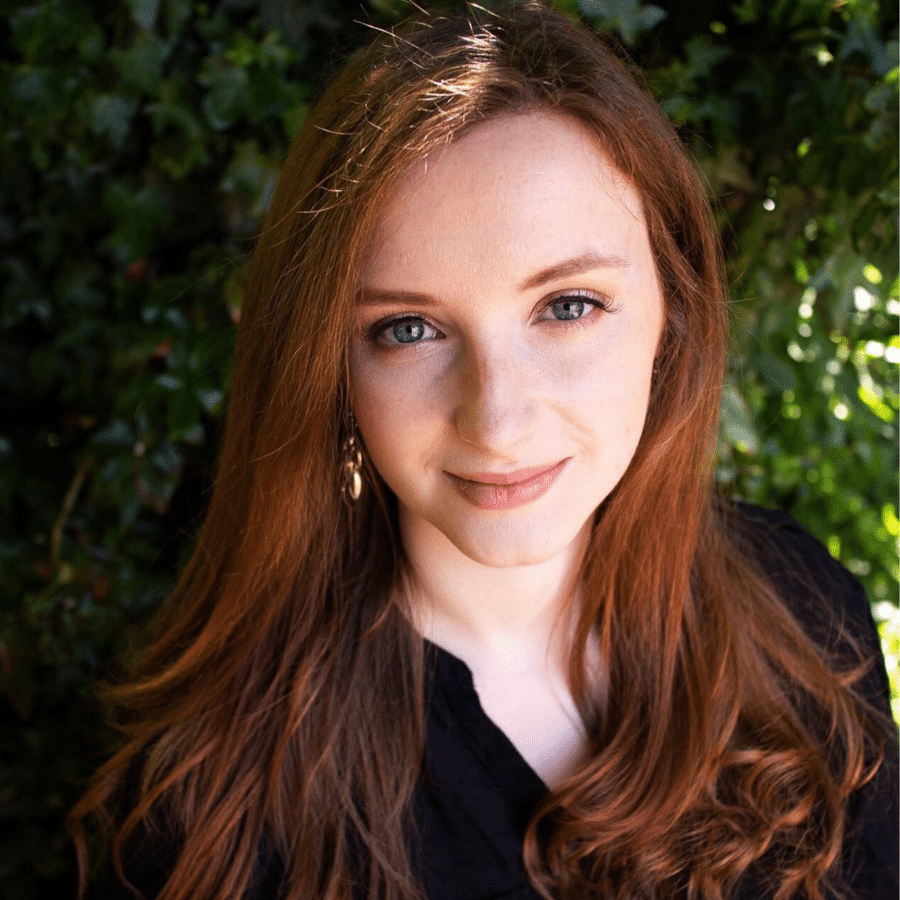
She sits down with NCW’s Steph McKenna to discuss why she chose to focus on the period between engagement and marriage in her protagonist’s life, the parallels between the work of archaeologists and writers, the challenges of second-person narration, and much more.
Ruthy Mason is a writer based in North London. After studying archaeology and anthropology at University College London, she completed a master’s in creative writing at the University of Cambridge, and is now working towards her PhD at Anglia Ruskin University. She won the Michael Holroyd Prize for Re-creative Fiction and was shortlisted for the Mslexia Fiction Competition. Death Do Us is her first novel.
Listen now
Edited by Omni Mix
Death Do Us
Bea has just got engaged. It should be the most exciting time of her life, but she can’t shake the feeling that something is wrong. Her engagement ring doesn’t fit – her finger is swollen and painful. As she begins to look at dresses and venues, she notices her skin is flaking and her hair is beginning to thin.
Nor can she shake the memories of a previous proposal from her ex-boyfriend a decade earlier. Back then, she was resistant to commitment, young, confident, with her whole life ahead of her. If she ever were to marry, she’d always imagined breaking with tradition – an elopement, a brightly-coloured outfit, an open marriage.
But as plans for the big day solidify, Bea begins to see the appeal of a big white dress, a huge reception, and a life with just one man. Yet the engagement ring is getting tighter and tighter. Something is crawling under her skin. Someone is watching them from the shadows…

Transcript
Steph
Ruthy, welcome to The Writing Life. It’s great to have you here today. How are you doing?
Ruthy
I am good, thank you, and thank you so much for having me. It’s great to be here.
Steph
Ah, it’s such a pleasure. We’re going to talk about your debut novel, Death Do Us, which has been described as a skin-crawling feminist horror novel, and it was published back in July.
I really enjoy the journey that you’re taken on as a reader with this book, and I think there are some very clever and strikingly unique stylistic choices that are made. So, this is probably definitely the first time I’ve had so many questions about archaeology to ask. I’m very excited to kind of dig into the book with you.
Ruthy
Great.
Steph
So, this is your debut novel, as I said. Can you tell us about the journey from the first idea to publication, and what were some of the key milestones for you along the way?
Ruthy
Yeah, absolutely. I mean, well, this is my debut, but it’s not the first novel I’ve written, which I think is a very common thing among writers. Sometimes it takes two or three to get there.
So, I had a YA novel that kind of didn’t get anywhere, and then I wrote a very, very quirky kind of retelling story, which again found me an agent but didn’t get to publication.
And then I got engaged. I started having these kind of very weird feelings because I’d always wanted to get married, and it always had been this thing that I just assumed would happen at some point in my life. I’d very much kind of bought into the whole, kind of, it just being an idyllic journey.
And then, as I kind of dug into things and started thinking about the decision, it got more complicated. So, I had kind of all these weird feelings about how I would look on the day and the pressure around that, and kind of ideas around my own mortality, and the fact that this felt like a very big step into adulthood.
Even though I was in my 30s, it felt like a threshold. I had to put all of those funky feelings somewhere, and they ended up in Death Do Us.
Steph
Brilliant. And it’s interesting that you say that you had a couple of books, sort of, finished, you know, the manuscripts finished, before this one was published, because that is definitely something we come across a lot.
And they’re probably, yeah, they’re in the kind of file cabinet drawer, aren’t they? Are they books that you think you’d dig out again and kind of revisit at a later date?
Ruthy
I definitely think that both of them have the potential for that, but I think even reflecting on where I was when I was writing them and where I am now, I’d want to take very different approaches to some of the topics.
I think ultimately the stories still have mileage, but just the execution I would want to do differently.
So, they are definitely being kept in the bottom of a drawer. They might not stay there forever, but for now they are there.
Steph
Yeah, great. And before turning to creative writing, you studied archaeology and anthropology, which feels very deeply connected to the novel’s symbolic language and to Bea, the main character, and her way of making sense of the world.
But what was that journey from kind of studying archaeology and anthropology into creative writing like for you? And what first drew you from those subjects into writing fiction?
Ruthy
I think it’s funny, actually, because I think the love of writing fiction came first. I was writing fan fiction as a teenager and, like…
Steph
Weren’t we all? Excellent.
Ruthy
And, like, I’ve always loved stories and loved reading and loved writing. But it almost felt like, especially as a teenager, how on earth do I get there?
I think I was very much just thinking about, ‘okay, next year I will go to university’, and, ‘oh, I should pick something that I’m interested in’. And I was interested in archaeology and I was interested in creative writing as well.
But, admittedly, the travel and the like, it was something that I knew that I would never invest time in once I was kind of in the adult working world, but that writing and books would always stay with me. So, it just felt like a good opportunity to study something I was interested in.
And so I did that for three years, totally not planning to be an archaeologist, but just doing the degree. And then I got a kind of normal job out of university in sales and very quickly was back on the writing, and realising that that was what I wanted to do.
So, I ended up then, after a couple of years, taking a master’s in creative writing, and it’s all kind of blossomed from there.
Steph
Yeah. Well, the studies you did certainly served you well for this novel, and we’ll dig back into that language a bit more in a bit.
But do you think studying archaeology helped to kind of shape the way you think about creative writing and sort of character and story at all? I’m sort of wondering about that idea of, you know, archaeologists piecing pieces of a puzzle together and looking at the micro and the macro.
There’s kind of transferable skills there, isn’t there?
Ruthy
Absolutely. And I think the anthropology as well had a really significant impact, because a lot of the questions behind both archaeology and anthropology are: what makes us human?
And so many of those questions and themes run through all sorts of kinds of literature, like why are we the way that we are? Why do we make the decisions that we do? Why do some of the events in our lives have such impact?
And I think those questions definitely fed into the text as I was trying to kind of examine my own feelings of why this felt strange and a bit odd.
I think that kind of examination and that analysis kind of lent itself well.
Steph
Well, let’s talk about the marriage you mentioned, the engagement that’s at the centre of the book.
Death Do Us centres on Bea during a specific period between her engagement and her marriage, which is a moment of transition for her. Her future lies ahead, but she’s growing increasingly anxious and uncertain as the big day draws near.
As you mentioned, it sounds like a lot of that fed from your own experience of going through an engagement and getting married, and some of the pressures that we’re put under. But it’s quite a tight timeline. It’s not building up to the engagement, we don’t see her marriage day, but what made you want to focus in on that particular period?
Ruthy
I think people don’t think about engagement as a liminal period, but it is, really. It’s a transition space between one state and another, like between girlhood and womanhood, in the way that I was perceiving it in my head, or at least certainly, it felt like a stepping stone on the way to adulthood.
And liminality and those periods and those rites of passage often are quite strange and sticky and uncomfortable, and so that felt like quite a fertile space to then explore a character’s unravelling.
Steph
Liminality was definitely something I picked up a lot across the novel, and one of the most striking things, as you say, is that Bea’s between. She’s between the engagement and marriage, she’s between identities, between life stages, and she’s feeling increasingly estranged from her own body.
She’s rapidly losing control, and one of the most striking aspects of the way that you tell Bea’s story is through the use of body horror. So, you know, those changes that Bea is experiencing in her life begin to manifest physically as well as psychologically.
Why did you choose to focus on body horror as a way of exploring that experience?
Ruthy
I think it was a couple of things. I read Nightbitch, which I loved, and was kind of a little bit mind-blown by it, so I think that was definitely in. And Our Wives Under the Sea — there were definitely a few books that I had recently read that just really resonated.
But also, one of the messages that I found really kind of hitting in the run-up to my own wedding day was, like, you have to look perfect and you have to be this bride.
I ended up with blepharitis on one of my eyes the day I was supposed to be having my hair and make-up trial. My eye swelled shut, and so obviously that had to be cancelled. I ended up going to the hospital for an emergency appointment, but it was so frustrating that my body was so uncooperative in that moment and it was something I couldn’t control.
And I think also stress manifests itself so much in the body in ways that you kind of can’t predict. Like, I’ll get eczema when I’m stressed. But also, I found going to doctors where they might dismissively say, ‘Oh, this is just stress,’ and kind of wanting to catch all of those little different reasons and elements, fed then into that kind of journey of decay that she goes on.
But then, without kind of ruining the ending of the book, there is a kind of bigger reason for that as well.
Steph
Yeah. So it sounds like you were able to express, through physical transformation in the book, some things that might have been harder to convey in writing through kind of internal thoughts alone.
Or even, actually, there might be thoughts that Bea hasn’t even come to realise herself, as you say, like anxiety, which instead is sort of easier to spell out to the reader on the page through physical transformation.
Ruthy
Definitely. And also, I think there’s something very visceral about it being the body. If she’s just contemplating these feelings, well, they are very big feelings, but there’s something kind of unavoidable about something going wrong with your body that is such a stark reminder that you are a kind of fleshy human being who can break so easily.
And that her kind of creeping dread throughout the novel is something that she can’t escape because it’s physically happening to her.
Steph
I’m glad you mentioned as well the kind of health anxiety element that runs through the story, because, yeah, one of the sort of quite important moments for me is when Bea is convinced that there is something wrong with her and she goes to the doctor.
And, of course, the doctor says, like, you know, how long have you been worrying about your health like this, rather than, you know, straight away understanding that she knows deep inside her that there is something wrong.
And it seems like the novel is quite interested in that gap between our own understanding of our experiences and the narratives that are imposed on us by kind of, you know, institutions, as well as relationships, because there’s quite a few different relationships that we see for Bea played out across the novel.
Was that something that you set out to explore from the beginning?
Ruthy
I definitely think that it was an aspect of it, and that there would need to be friction between Bea’s own perception of what was happening and the rest of the world’s perception, because that’s kind of where the horror sits. Like, if you’re going, ‘Something is wrong, something is wrong, something is wrong,’ and everyone else around you is saying, ‘No, it’s fine,’ that’s almost more terrifying than someone agreeing with you, because then you’re like, ‘What’s wrong with me? Why am I seeing the world differently?’
And I think that then kind of seeds itself into some of the bigger questions around, like, is marriage what young women should be doing? Is this, you know, effectively what was a transaction at one point, that has now become so much of a kind of culture and identity? Is that something that we should just go along with because it’s tradition, or should we dig deeper?
And then, if you are digging deeper and having questions when other people don’t seem to be, does that make you—how are you kind of seen, and how do you take that away? And I think, again, kind of seeing the messages of, ‘Oh, you’ll be this beautiful bride and everything will be wonderful. You get married, and that’s just what you do,’ and then questioning that.
And then feeling like, ‘Am I the person questioning this?’ Obviously, you’re not, but sometimes it can feel isolated.
Steph
Yeah, absolutely. And we touch on the relationships that Bea has, not just with her romantic partner, but with her friends and her family.
What did each kind of relationship allow you to reveal about Bea that perhaps she didn’t understand about herself?
Ruthy
I think Joy is a key kind of reflection of the person that she could have been. And I think Bea is kind of subconsciously aware of that to a point, but probably doesn’t want to look at it in the face.
And then, obviously, her fiancé is kind of an anchor to a traditional journey, but also, I think, is a kind of universe in which, if things had been different for her, might have been just a happy, normal path.
The character that I probably had the most fun with was Millie, who receives such kind of visceral reactions whenever she’s mentioned. And admittedly, Millie is channelling a lot of the things that I don’t like about myself.
And so whenever people go, ‘I hate her,’ I’m like, ‘Oh no.’
Steph
Oh no!
Ruthy
But, yeah, she, I think, is some of the embodiments that I had around some of the institutions and I think the insecurities that she has, but also a kind of parallel to Bea in the choices that they make and why they make them.
And kind of giving another voice to not just the critical analysis of marriage, but also some of the positives, but also, yeah, just a different, a slightly different interpretation.
And then she has her ex-boyfriend, who is this kind of shadow over the novel, and a lot of the novel kind of links to flashbacks of him and a different relationship that she could have had, but doesn’t. And his presence, as the book moves through, gets more and more intense and more and more looming, with Bea kind of questioning why she’s going down this path with her fiancé and not with him.
Steph
Glad you mentioned the structure, because it’s a very distinct structure, isn’t it? You’ve got these two narrative modes. As you say, there’s a third-person present-day storyline, and then a second-person account of Bea’s past relationship.
So, we’ve got kind of Bea through the different versions of events, basically. What drew you to that structure, and what did that second-person account in particular allow you to do? Because that’s quite a unique choice.
Ruthy
Yeah. I love second-person narration. It’s a big kind of passion of mine when I write.
And the reason I chose to use it in this case, and I know it’s very Marmite — some people love it, some people hate it. I am definitely on the love-it camp — was because it’s such an anchor. It’s a way of pointing to a character and being like, ‘Pay attention to this character,’ without saying that in any other way, because her focus throughout the book is on him, because he is who she’s talking to the whole way through the book.
It’s kind of like a little flashing neon sign that says there’s more here, that you get kind of even in the first few pages.
And it was funny, actually, because when I initially started drafting the book, there were no flashback sections. It was very much the journey. But then I had this character who was thinking that she was decaying, and there was no kind of big why behind it.
And the more I kind of dug into it and the more I thought about it, the more I was like, I actually need to illustrate this journey too, and why her past is kind of intermingling so much with her present.
And I think, again, the archaeology really feeds into that: that history and tradition is having kind of an impact on where she is now, just as her own personal history is having a significant impact on where she is now.
Steph
Yeah. I thought it was brilliant, and I thought it really did add to that element of additional context and understanding for Bea. But also, as you say, there’s a bit of a neon, there’s a bit of a flashing alarm saying, ‘Yes, there is more going on here.’
But also, you know, we’re kind of gathering the pieces of what that might be. But we also can’t rely entirely on what Bea’s version of events is and what she’s saying. There’s an unreliability there.
And once you finish the novel, looking back, there are clues sort of interwoven throughout the narrative that kind of build to a bigger revelation, but that eventual revelation still comes as a surprise.
And how did you balance that kind of question of concealment and disclosure, so that you were drip-feeding elements about Bea’s background and her experiences? How did you manage to drip-feed that without giving away too much?
Were there things that you sort of put in that you decided to take out later? Were you still wanting the audience to feel very surprised at the end? Did you want there to be an element of, actually, you can piece the clues together and sort of get this before the end?
Ruthy
I definitely find it frustrating when you read a book and there’s a twist and there’s no way that you could have possibly pieced it together. You’ve got to have seeded it.
Steph
Got to have some Easter eggs, right? Yeah.
Ruthy
There needs to be a journey where a reader, like, the dream is that it blindsides you, but then you go back and think, ‘Oh, there was that, and there was that, and, oh, of course.’
And I remember reading Life of Pi and that being like one of those moments for me where I was like, ‘I can’t believe—oh, wait.’ And so I really wanted to give enough that some readers might pick it up.
But I hope I’ve done it in a way that’s subtle enough that it still is a question mark there.
But definitely, especially things with the media in the book, it was a very difficult balancing act of, like, how does this work? Is this realistic? Can this be explained? Can it not?
And that was definitely a tightrope walk that me and my editors went back and forth on for a while, around, like, how does this work and how—does it make sense? Is it realistic?
Yeah, that was definitely, definitely a challenging bit of the novel, for sure.
Steph
Interesting. For me as a reader, I’d got the vibe that there’s something hidden that’s going to be revealed, and that there is a big piece of the puzzle that you’re not understanding.
But it was only when I went back afterwards and looked at my notes and the kind of things I’d underlined that I noticed things like, you know, Joy hinting that her friend Bea is nervous of cars, for example. Just a tiny little tidbit that doesn’t really mean anything and that you can skim over, but actually, yeah, if you’re trying to pick up on the clues, they are there. They’re just very subtle.
Was there a point in the book in particular where you wanted that kind of balance to tip, and you wanted readers to begin questioning Bea’s account of events? Does that start quite early for you, or…?
Ruthy
I think, in some ways, you’re seeding doubt right from the beginning, when she’s sitting on the loo after getting engaged, because immediately there’s something not right here, physically, that seems a little bit extreme.
But then, at the same time, you need to be able to rely on that narrator to a point. Otherwise, you know, it’s hard to take you through the story if immediately you’re thinking, ‘None of this is true at all.’
So, I don’t think there was a specific point. I kind of just think of it as a kind of dripping through the book, that little by little you’re like, ‘Oh, hang on a minute. This doesn’t feel quite right.’
And things like the car, which is very early in the book as well. I mentioned, like, ‘Oh, she’s not that happy, so her fiancé is driving.’ Things like that, I wanted them to just feel so kind of natural at first, and then, as more and more things… So, it was definitely more of a trickling kind of approach.
Steph
So, it sounds like you knew where you were going to end up with Bea from the very beginning?
Did you have that entire kind of story arc mapped out in terms of that big kind of reveal?
Ruthy
I did. I think the ending for Bea, in some ways, I wanted to give her a happy ending for a while, and I guess she kind of gets that.
But at points I gave her happier endings. And the more that it became—because, again, I think when I started writing it, I wasn’t 100% sure that it was a horror. It was just a story that I felt like writing.
And the more that it became clear, ‘I know this is definitely a horror,’ the more it was like, I need to make the ending ambiguous.
So, I definitely had the journey up until very, very nearly the end, but the final kind of chapters were still, like, once that reveal had been made, the final chapters were still a little bit in flux.
But I’m actually really happy now with where Bea’s journey finished.
Steph
Yeah, and as you say, it’s not a happy ending, but it’s not, you know, entirely dark either. It’s an ambiguous ending.
When you were writing the book, then, and you were thinking about the horror elements, how closely were you paying attention to, you know, tropes of the genre or reader expectations? Did that kind of influence your thinking or your approach to the book very much?
Ruthy
This is going to sound awful, but I really didn’t. I did not think about that at all, at all, because I think I didn’t really realise I was writing a horror. I was just kind of like, ‘I’m writing this story.’
But then, reflecting on it, I referenced The Fly, which was a really big influence in the book, which is a body horror, so obviously that’s what I was writing. But I think at the time I was just writing a story because I wanted to write that story.
And I personally, like, I love Nightbitch, I love Our Wives Under the Sea, but I wouldn’t call myself a horror reader. So I don’t think I have—and, like, this is terrible, but I’ve never read any Stephen King, you know? I should. But I wouldn’t say I’m, like, super, super in the genre and so would know those tropes really, really well.
Which is probably why Death Do Us has come out the way that it is. And I think it’s probably not like a classic horror. There’s definitely a kind of more speculative—it’s the wrong word—but there’s, like, a different kind of angle in a way.
Steph
Yeah. I think, as someone who’s a big horror fan, I’m obviously immediately drawn to pointing out anything that could be even slightly interpreted as horror in a story. So those body horror elements really struck me.
But I know that lots of readers were saying, you know, this is more of a psychological thriller. Yeah, there’s different ways of looking at it, isn’t there? And it’s also a love story, really, in a way, and it’s centred on a young woman and her relationships.
Ruthy
Yeah. And I think there was definitely a moment where I had it as a psychological thriller in my head as well, which is probably why it is kind of moving between those genres a little bit.
Because I, as a writer, didn’t set out with a genre in mind. I just had a story that I wanted to tell.
And definitely, I think I personally as well love love stories, which is probably why that has come out. And I’m working on a speculative fiction piece at the end and, lo and behold, there’s quite a big love story in that as well. So, clearly, that’s where my heart goes.
Steph
I love that. Yeah, thriller and love story go hand in hand for you.
I wanted to pick up on the archaeology and the anthropology again. I said that that was something that I had more questions than usual about, but it was absolutely one of my favourite aspects of the novel, is the way that these two studies shape Bea’s worldview, but also the symbolic language of the story.
So, there’s references to ritual and ceremony and tradition and sacrifice. What kind of connections were you interested in making between Bea and these much older histories of sort of communal practice and belief?
Ruthy
I think it’s kind of turning a spotlight onto some of the traditions and behaviours that we have today that we don’t really—we take for granted. We’re like, ‘Oh, that’s just what you do. You just get married. That’s part of life. That’s just what you do.’
And looking at the past and reflecting on things that were obviously different then, and different approaches to living, was something that I then wanted to highlight, so that as we’re examining them, we’re also examining today.
And I think it really is that interplay between how the past shapes the present that I wanted to lean on, and how those kinds of different—I mean, I think quite starkly, they go to a burning of the martyrs, which happens in Sussex. And, like, I think they go to mannequin graveyard at some point, which, like, in my mind, I’m like, ‘Oh my goodness, the archaeological site that would be there in 300 years’ time, and how strange would that be for future historians to be digging up all these mannequins and thinking, what on earth was this?’
But we just are like, ‘Oh yeah, this is what we do,’ and we don’t think about the why. And so these things are kind of taken for granted as just part of life.
And so I think taking something that has a kind of analytical practice to it and then transposing it today. I think there’s a line where she makes a joke about the fact that there are people kind of taking ayahuasca, and she’s drinking gin and tonics to cope with her mother-in-law. And those kinds of parallels are what I really wanted to kind of play around with: how different are we? How much are our traditions different? How much has changed as well?
I think, again, there’s another passage where she’s in a graveyard looking at the stones of women where they’ve kind of disappeared into the names of their husbands or their fathers, and they’re just kind of property. And then reflecting on the kind of loss of her own identity if she takes her husband’s name, and kind of comparing and reflecting on those two things.
Because, I mean, today it’s still a big kind of debate: when you get married, do you take your partner’s name? Do you not? Like, how does that work out?
It’s still something that people discuss, and I again had a real kind of debate: do I want my husband’s name? Do I want the identity I’ve had to disappear? So, yeah.
Steph
We have the same debate in our household, having been engaged for a very long time and not quite organising ourselves enough.
But, yeah, whose surname do we take? Do they work as double-barrelled surnames? It’s quite a big conversation to have, isn’t it?
And that relationship between past and present also manifests itself through fragments of lecture notes and research materials that are littered throughout the book. They’re Bea’s sort of research materials, but they also sit alongside text messages, internet searches, social media posts, that kind of thing.
Can you tell us a little bit about it? It sounds like it builds into that idea of bringing two different forms of documentation together within the narrative.
Ruthy
Yeah, absolutely. And so it was in part that, but also I think it’s very hard now to separate ourselves from the media that is around us. We all have phones, or a lot of us do, or access to the internet or televisions, and there’s so much messaging coming from all of those different mediums.
And your algorithm changes, so when you get engaged, suddenly you start getting videos on your phone of getting engaged. And I wanted that kind of overwhelm of media and all of these different potential narratives and opinions and voices to be influencing how Bea interprets what is happening to her.
And, like, I think I have NHS searches where she’s looking up symptoms with her body and then trying to compare it to what she’s actually experiencing, and just that interplay of how embedded media is now.
It’s not like we have to go to libraries and look in books to find information. It’s there at our fingertips. But is that always a good thing for us? Or can that be overwhelming?
Steph
You currently work in Big Tech alongside your writing. Did that have any influence on kind of the things that you included? And did it influence your thinking around the way that those fragments of text were making me think about, you know, historical archive and the way that we—you know, digital traces we have of ourselves today and the way that, you know, we’re going to be documented in the future through what we’ve done digitally?
So, does your work in Big Tech kind of overlap with that at all?
Ruthy
My work in Big Tech is kind of more operational, so I deal with the tools that help sales teams. So it doesn’t overlap that much.
But I definitely, as a social media user, did reflect heavily on kind of the whole theme of decay and graveyards. I was thinking about digital graveyards and the fact that I think Millie, in particular, kind of curates an image of her life.
And then Bea compares this to, like, Tutankhamun’s gold sarcophagus, that he’s presenting this kind of gilded, idealised version of a 14-year-old boy in death, and that she’s got her Instagram, which is a kind of perfect version of her, um, and it being a kind of memento mori of life.
So, yeah, that was playing into my mind, but it doesn’t actually connect to where I am in my work.
Steph
Yeah, it’s more everyday experience, something that we’re all going through.
There’s a bit where Bea’s talking or dressing her ex-partner and talks about how he liked museums because of the way they give objects and people kind of permanence.
And I guess social media is strange, isn’t it? Because it’s, I guess, kind of our museum in a way, but it’s impermanent and yet it’s also permanent, because actually digital footprints do last in a way that a lot of us take for granted.
Ruthy
Yeah, I think there’s something strangely ephemeral about it, because, like, I remember Bebo being a thing, and now I don’t think you can access it anymore.
And I think there are probably records of myself as a teenager that are somewhere out there.
Steph
Myspace, Yeah.
Ruthy
And I don’t think they’re gone, but I can’t access them. And I do regularly think about, again, kind of future archaeologists and how are they going to look at our version of the world when so much information is digital? Whether or not it will be accessible, I don’t know.
But then also, so much of it now is fake. And so, like, with AI and deepfakes, I just think, how on earth are they going to piece together what life looked like when people today can’t tell if things are real or fake online?
So, yeah, it is quite a strange place to be in, in that we could all forever have records of ourselves, but whether or not A, they’re accessible, and B, comprehensible, I’m not sure.
Steph
It’s more liminal spaces for us to dig into.
I wanted to also touch on kind of links to the anthropological side of things, and Bea’s transformation over the duration of the book.
One thing that really struck me was the tension between her studies and her lived experience. So she’s trained to analyse human behaviour from a distance and on a sort of macro, social and cultural level, but she’s experiencing this deeply personal crisis at the same time.
And for a lot of the novel, I think she is very focused in on the individual and the personal crisis that she’s undergoing. And it’s only towards the end that her perspective seems to kind of shift, and she’s able to sort of arrive at something closer to what she terms as an anthropological distance.
Were you thinking about that? How did you approach that kind of evolution in her way of seeing herself and the world?
Ruthy
I think there’s definitely a kind of tension running between her as a character, because she has an image of herself that is this kind of academic anthropologist, archaeologist, with this kind of research, and then there’s this desire that she has to conform to a tradition that she doesn’t quite agree with, but it’s there and she doesn’t know why. And it’s ingrained.
And I think a lot of people feel that tension. A lot of people can go, ‘Oh, well, I know in my rational brain that this is what’s happening, but there’s an emotional side of me that feels completely different.’
And not just emotional, but, like, the weight of tradition and everyone around her, and kind of new people that she’s meeting that are putting certain pressures on her. And all of those things end up kind of pushing her down the more kind of journey that is less true to herself, but also is true to herself, in that there are things that are ingrained and deep, deep within her, and experiences that she’s had that push her down this path.
And I think I did want to really capture that kind of duality, and that you can be a person who can have very kind of—you can rationalise things, but it doesn’t stop those feelings, and it doesn’t stop that kind of ingrained, ‘This is how I feel it should be.’
So that was definitely, definitely an intention through writing her journey.
Steph
And looking back now on the process of writing and editing the novel, what were the biggest challenges for you?
Ruthy
I think managing those dual timelines was pretty tough, making sure that everything balanced, and that you didn’t get too much of one and not enough of the other, and making sure that you could still kind of follow threads through.
Because there is a lot with the mixed media, the present day and the past all kind of crammed together, and the second-person narration, so it felt like quite a lot to juggle.
My actual process is very edit-heavy. So, I will write one draft that is nonsense and then kind of piece it together from there.
And so it was very much a case of just getting the story out, and then polish and polish and polish, and redraft and redraft and redraft. And I always read all of my work aloud as well.
So, it definitely kind of was edit-heavy to get all those components working together.
Steph
Did you share early versions of the manuscript with other people? Did you have kind of beta readers?
Ruthy
So I have two beta readers, well, three really.
My husband reads everything that I write first, and he is a brilliant, brilliant first editor as well, in that he’s got quite an eye for that sort of thing. So he reads, and also, with the theme, it was very, very appropriate for him to read it first.
My mum reads everything I write, and I have a very good friend who also reads, who I met on my master’s. I read everything she writes, and she reads everything I write.
So, just three beta readers, and then off to my agent.
Steph
It’s excellent to have those skills close to home, isn’t it, through the relationships around you?
What were you most proud of about this book?
Ruthy
Oh, that’s such a good question. Probably that it’s an actual real book out in the world. That was amazing.
And I think, after having books that do live kind of in the cupboard, for no one else’s eyes, it is really special to see it in the world. And it’s been a dream for such a long time.
But also, I do like the ending. I’m pleased with the ending and where Bea ends up, and that kind of journey.
Steph
Endings are notoriously hard, as Stephen King can definitely attest. It doesn’t always stick the landing, and I think this comes together very well.
Did you write this after you got married, or during?
Ruthy
During.
Steph
During. Did it help you kind of come to terms with some of those thoughts that you were having about your own personal situation along the way?
Ruthy
Definitely, and I hope that other people who read it who might be having those questions feel seen and feel like they’re not alone.
If you are getting married and thinking, ‘Oh my goodness, what am I doing?’, I hope that it helps, that certainly you’re not alone.
But, yeah, I started writing it about three weeks after we got engaged. So when I told my husband, and I was like, ‘Oh, I’m writing a book about a woman who thinks her engagement ring’s turning her into a corpse,’ he was like, ‘Okay. Cool.’
But he was super supportive, as always. But, yeah, definitely, it was a really cathartic exercise because I was writing it as I was feeling those things and having those thoughts. And so, yeah, it definitely played into my journey.
Steph
And, as you say, there’s lots and lots of talk about the wedding day and anxiety around the day and it being perfect, and, you know, there’s so much to plan.
But actually, even having a conversation about how you can be very excited to be engaged and married, but still have those moments where you go, ‘Why am I doing this? Maybe this is a terrible idea. This is too much. What does this mean for me?’ is, you know, completely natural.
And it struck me when I was reading this that, for an institution and a kind of social practice that has been around for thousands of years and has also been teased apart, you know, for its power dynamics and its flaws as well as its strengths for kind of hundreds of years, there’s like a really notable spike at the moment, or particular fixation on darker stories about brides and weddings and marriage in literature, but also film and TV.
There’s been a few films and a few TV series recently which have been about that kind of wedding build-up, or that, you know, on-the-wedding-day kind of moment.
Why do you think at the moment that this space has become such sort of fertile ground for those kind of stories?
Ruthy
It’s a really good question.
I think probably because it is something that we—I mean, you’re seeing the same kinds of stories, I’d say, about motherhood. And I think it is kind of a practice and an element of the patriarchy that still stands very strong.
And, you know, I’m married, I loved my wedding day and had a very happy time. Admittedly, probably a little bit too much like Millie in my planning, but, like, I had a great time. I loved it. And I’m very attached to it and very happy with the decision that I made.
And I think there is—and I’m thinking again, yesteryear and the kind of trad-wife kind of content that’s now being seen—that there are kind of resurgences in some of these viewpoints. And so it is important at the same time to have kind of the questions and, I think, pieces of kind of horror which explore some of the darker thoughts around these areas.
Like motherhood, like kind of these traditional roles of mothers and brides, that as we see kind of a resurgence in some of those more conservative values, we’ll probably also see more stories about this where we’re then questioning them.
Steph
And now this book is out in the world, what is next for you? Do you have any more writing projects in the works?
Ruthy
Yeah, so I’ve written a children’s book because, after this, I had to write something fun.
Steph
Palette cleanser, yes.
Ruthy
Yeah, so that’s probably going on submission soon. And then I am writing my second adult book, which is a speculative fiction, which I’m describing loosely as Never Let Me Go meets Tomorrow, and Tomorrow, and Tomorrow.
And it’s about a group of university students who are being rattled when they learn that one of them is what I’m terming a revisionist. So it’s a person who’s had the ageing process reversed. So they were kind of in their 80s, and now we’re a teenager again.
And then it’s the kind of fallout of their lives after learning that one of them had effectively lived before and what happens to them, and whether or not they decide—what if they’re going to have a chance at a second life, whether they should take it.
Steph
Wow, fascinating. I look forward reading that when it eventually hits bookshelves.
Ruthy
Thank you.
Steph
Ruthy, thank you so much for taking the time to speak to me today. It’s been really fascinating. I really enjoyed the book.
Where can people find you and your work?
Ruthy
So, Death Do Us at all good bookshops, and then you can find me on Instagram. I think it’s @ruthy_mason_author. So you can find and follow along there.
Steph
Excellent. Thank you so much.
Ruthy
Great, thank you. It’s been great to talk to you.
You may also like...

Writing grief and the body: Lisabelle Tay & Heather Parry in conversation with Yan Ge
In this Halloween-flavoured episode of The Writing Life Podcast, writers Lisabelle Tay and Heather Parry discuss writing grief and the monstrous body.

3rd November 2025

World building in horror fiction: Julia Armfield on Private Rites
In this episode of The Writing Life podcast, prize-winning writer Julia Armfield shares insights on world building in horror fiction.
30th June 2025

From writing craft to witchcraft with Kirsty Logan
Award-winning novelist, Kirsty Logan, joins us on the podcast to discuss writing witchcraft, her books, poems and to discuss identity, revenge and research beyond the internet
3rd January 2023