


How do real-life experience, research and curiosity become engaging non-fiction books?
In this interview, Suffolk-based writer, strategist and co-founder of a brand communications agency Erika Clegg shares insights into her creative process, from developing ideas and conducting research to shaping material into compelling narratives.
Drawing on her books Junk Values and Southwold365, Erika discusses the inspirations behind her work, the impact of creative writing courses, and the techniques she uses to turn knowledge and observation into stories that connect with readers.
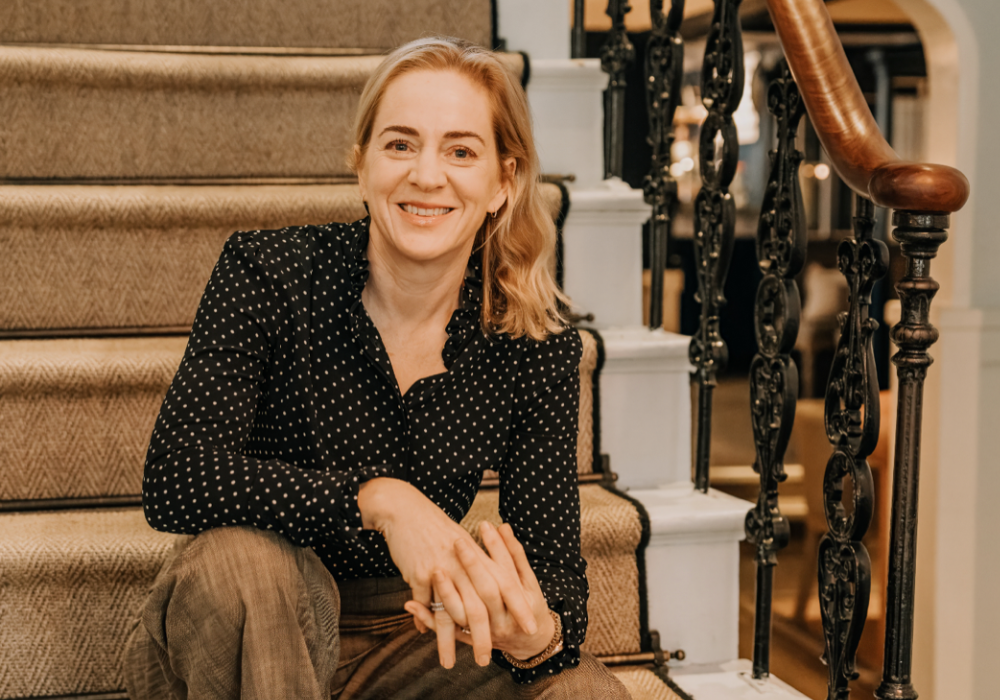
You recently published Junk Values, a deep-dive into ‘the biggest corporate con of the 21st century,’ and Southwold365, a quirky compendium of Southwold’s highlights and history, congratulations! Can you tell us a little about the books and what inspired you to write each of them?
 Junk Values – currently shortlisted in the Smart Thinking category of the Business Book Awards 2026 – was born of frustration. I spend my working life helping organisations work out what really matters to them and then making sure their behaviour reflects it. Again and again, I saw companies declaring values that sounded admirable but bore little relationship to what actually happened inside the business.
The problem with this is that if people or organisations say things are important to them but then those things are not evident in their behaviour, they lose trust, and that has some pretty serious consequences. Over the course of a few years my frustration with this grew to such a degree that to write a book was unavoidable.
As for Southwold365? Well, that is an equally unavoidable outcome of my love for my hometown. Its start point was a year-long Instagram project I took on to record a fact about or feature of the town every day for a year. I wanted to spread some cheer on what can often be rather antisocial media. At the end of the year it seemed a waste to let it languish in the backwaters of Meta and so the book came to be. Whilst I edited the text fairly thoroughly to suit its new form, the content is broadly the same as the original.
You’re an alumna of two NCW Academy online tutored courses, Creative Non-Fiction: An Introduction with Keiron Pim and Kickstart Your Poetry with Kathryn Simmonds. What was it like studying online and receiving regular feedback from experienced tutors? How did the courses influence your development as a writer?
Oh I loved it! The first course I did, with Kieron, was in support of my work to a great degree. My role requires me to infuse the ordinary with sunlight, to make facts sing. I have always enjoyed writing and been able to use it as a core feature of my career, initially in brand communications and more recently in management consultancy, but have received no formal training after my degree. I wanted to finesse my technique and rid myself of bad habits. It was brilliant for that and I absolutely loved the assignments.
The poetry course was something different. As adults, unless we are crafty types (I’m not!), we tend to lose opportunities to be creative for no reason. But it’s good for the soul. So I signed up for poetry precisely because it is *not* my career. I was delighted to find I had some skill, which Kathryn helped me to fine tune. I ended up with a small collection of very different styles which I treasure and enjoy reading occasionally.
What were the biggest benefits of taking an online tutored course, and would you recommend the experience to other writers?
From a practical point of view, the online aspect means that you can be anywhere and still access the course. I travel a lot for work, and have a family to be with when I’m not, so it would have been impractical to sign up for anything which I had to attend in person. It’s good to be able to access something of this quality without being near it.
But the real value wasn’t simply convenience. It was having someone knowledgeable pay proper attention to the writing. Good feedback makes you see things you simply can’t see when you’re sitting inside your own work. It gave me both greater confidence in what I was doing well and much more awareness of where I could improve.
So yes: I would emphatically recommend it!
Is there somewhere you find especially inspiring as a writer, in Southwold or otherwise?
If I don’t need to do internet research I’ll go and sit in the beach hut, pop up the table, and crack on. When the weather’s a bit colder I’ll hunker down in the Swan Hotel lounge, drink tea and write – they even receive an acknowledgment for their excellent tea in the afterword of Junk Values!
Professor Steve Peters, author of the Chimp Paradox, advises that you can’t wait for the chimp to be ready. You have to start despite its reluctance. For me that requires AirPods and Hans Zimmer. I tried other composers but there’s something about Zimmer that really gets me in the right frame of mind. My Spotify summary at the end of 2024 was pretty heavily Zimmer based!
What was the editing and publishing process like, and what did you learn along the way?
I decided to work with an independent publisher rather than to try to sell Junk Values into one of the larger publishing houses. This was based on researching timeframes, more than anything else – Junk Values is essentially my calling card and I didn’t want to have to go through months of back and forth.
For both books I worked with Softwood Books, who are fairly new and growing fast. They really know what they are doing, are full of great advice, support me with marketing and retail, and are by my side for launches and awards. It’s excellent service.
I’m lucky to have contacts who helped me turn my words into a finished book. Both books were designed by Bex Spillings, a former colleague who has always been an exceptional typographical layout designer. Junk Values was proofread, and to some degree edited, by Ariane Laurent-Smith, who balanced her freelance work with a position at Oxford University in communications. And much of the photographic content of Southwold365 was taken by my husband, Simon Hazelgrove, who wanted to improve on some of my original Instagram images.
It takes a village to raise a child, and to produce a book!
Research plays a significant role in your work. How do you approach it? Do you begin with extensive research, or discover information as the writing evolves?
That’s an excellent question which has caused me to look back on my research process.
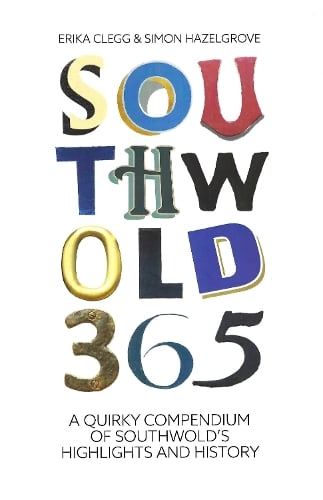
Taking Junk Values as an example, I started with a trove of knowledge based on my work with clients and a body of stories and examples I have built up over the years to share in talks and masterclasses. That shaped the initial structure.
But then each chapter had a clear purpose and I treated them as standalone projects, undertaking additional research to ensure they were rich in evidence and detail. I didn’t read anything back until every chapter was written, at which point I read the whole thing through, changed the chapter order, made some serious edits and did additional research to fill gaps. Then before publication I fact checked again, and Ariane made some helpful suggestions based on her own research.
Clearly Southwold365 is wholly based on research and this took up to an hour a day, every day of the year in which I worked on the Instagram account. Much of my information came from the internet which is rich in people’s passions, with all sorts of niche knowledge to be found in websites, blogs and forums. I was also given access to the annals and storage rooms of the council, Adnams, the museum and church, as well as some private family homes and hidden courtyards. I was careful to check and cross-check, ensure sources were reliable and, if in doubt, leave it out.
A few posts received comments of correction which were always gratefully received. Sadly no system is infallible and one post made it into the book with a building incorrectly attributed to an architect with almost exactly the same name as its actual designer – who had, ironically, worked in the practice to which I had misattributed his design! Iconic architectural guide Pevsner made exactly the same mistake in its recent new edition so I am in good company but nonetheless both an apology and an erratum note were needed.
Before becoming a writer, you worked in management consultancy. How has that background shaped your perspective, interests and approach to writing? Do you think your more visual projects like Southwold365 is influenced by that skillset?
I still work in this field (sadly until the film rights of Junk Values or Southwold365 are sold to Hollywood, they won’t make me a living!) and Junk Values was essentially written to support my work.
My sense is that my approach in everything I do professionally, including the books, is a combination of strategic and creative, data-driven and intuitive, research and imagination. Those balances are essential in my work, and allow me to ask different, sometimes difficult, questions; to see things from an unusual perspective, and to find the treasure that lurks under almost every surface. That’s what informs my work with companies, that’s what inspired me to take on the huge Southwold challenge, and that influences my writing and speaking styles.
Answering your questions has shown me an interesting pattern that I hadn’t noticed. Junk Values finds the truth beneath corporate language, Southwold365 finds the stories beneath familiar streets, my professional work finds the treasure beneath organisations and the two writing courses I have done with the National Centre for Writing have taught me to look more carefully at the words I use to reveal it. Thank you!
What’s the best piece of advice you’d give to someone embarking on a major writing project, whether that’s a book, long-form article or creative work?
JFDI.
It won’t start if you don’t start. So just flipping do it!
Looking back, what role have writing courses, mentors and creative communities played in your journey as a writer?
Not enough. Until I signed up for these courses, I had had no tuition or support beyond the grit in the oyster that is client feedback. And client feedback is necessarily about whether the writing has done its job, not about making you a better writer.
What I lacked was the technical feedback that moves you on from good writing to writing that can really make a difference to its readers. That kind of attention is enormously valuable.
Finally, what’s next for you?
In my life I probably spend most time trying to make sense of things, connect patterns, unearth unexpected joys. Writing is, and always has been, at the core of that.
Having had two books published in the last 18 months, with one of them shortlisted in the Business Book Awards and the other becoming Southwold Books’ best ever seller within three weeks of launch, I am sure there are another few books in me at least!
Though what topics they will cover remains to be seen – I have a partially written book of circus biographies that I am hoping to pick up again at some point, and a thought buzzing round about the lives of three of my most fascinating female ancestors. So I don’t know which one will win yet. But there are several stories rattling the bars, which is probably a good sign.
Looking for support with your writing?
NCW Academy offers plenty of options for aspiring writers, from in-person workshops and evening courses, self-paced and tutored online courses, and mentoring.
Our online tutored courses, like the one Erika was a student of, begin in October 2026 and February/March 2027. Learn to write fiction and non-fiction, genre and memoir, with practical lessons, regular assignments and personalised feedback from your expert tutor.
Browse more from NCW Academy →

You may also like...

Finding (and keeping) your creative non-fiction voice
Writer Edward Parnell shares his thoughts on how to find and sustain a distinctive personal style while writing about real people and events.

2nd December 2025

Interviewing subjects for non-fiction: a beginner’s checklist
From filtering through personal stories about an important figure to getting the gritty facts from a potentially taciturn expert, interviewing is a challenging skill that needs the right preparation.
15th August 2025

Five essential research sources for your historical writing project
From physical archives to online databases, today’s writers have an abundance of historical resources at their fingertips. But with so many options, where should you begin?
16th July 2025