


In this episode of The Writing Life Podcast, Polly Barton and Charlotte Goff discuss their paths into literary translation and their experience translating Nao-Cola Yamazaki’s novels from Japanese into English.
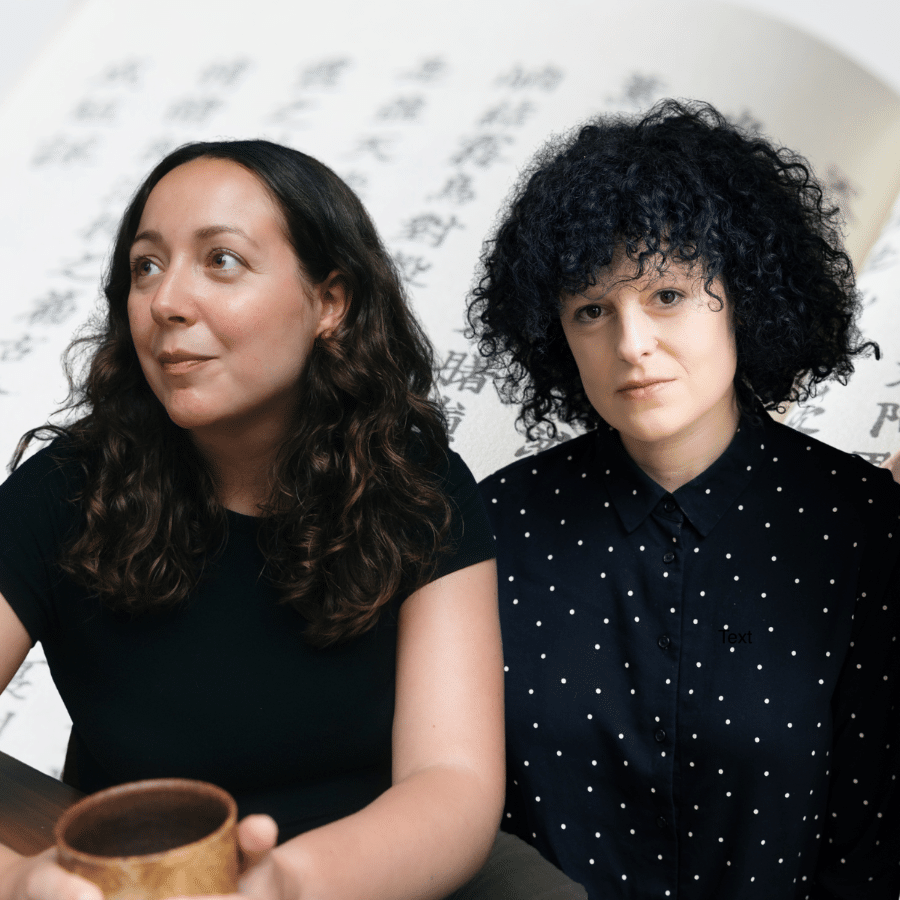
They sat down with NCW’s Rebecca DeWald to reflect on their journey from working together on the Emerging Translator Mentorship programme to translating books from the same author. They also explore translating books written from the male perspective, balancing staying faithful to the original text with interpretive freedom, and learning to trust yourself as a literary translator.
Polly Barton is a writer and literary translator from Japanese into English. Her translations include Butter by Asako Yuzuki, Hunchback by Saou Ichikawa, Where the Wild Ladies Are by Aoko Matsuda and There’s No Such Thing as an Easy Job by Kikuko Tsumura. Her debut novel, What Am I, A Deer?, was published in April 2026. Her most recent translation is Don’t Laugh at Other People’s Sex Lives by Nao-Cola Yamazaki.
Charlotte Goff is an Edinburgh-based Japanese-English literary translator. Her first translations are Nao-Cola Yamazaki’s Beautiful Distance (Daunt, Zando 2026) and Aya Koda’s Tree (Penguin 2026). Charlotte was selected for one of the National Centre for Writing’s 2024 Emerging Translator Mentorships, which involved six months’ mentoring by Polly Barton.
Listen now
Edited by Omni Mix
Transcript
Rebecca
Hello and welcome to the This Writing Life podcast.
Hi, Polly. Hi, Charlotte. Nice to see you again. We’ve met before because I coordinate the Emerging Translator Mentorships Programme. And, as you will have heard in the intro, Polly Barton was our mentor for Japanese over a number of years, and Charlotte was one of her mentees one year.
So I’m very much looking forward to talking to you about the mentorship and what came after the mentorship, because I feel like I always get the sort of lay-down of, you know, mentors selecting who they want to work with and kind of agonising over who makes the best candidate for our mentorship. And then we work together in industry events, and I see you kind of progressing throughout the year and at the final showcase at the end as well, but I don’t often tend to see what happens after.
And so this is very exciting for me as well. So thank you very much for joining me for this podcast recording.
I was wondering whether we’ll start at the very beginning as well, with the mentorship. So you two worked together 23–24, I think. And so what we do with the mentorship is the mentors select from the applicants to the mentorship programme. So I kind of give a helping hand to people struggling a little bit or have questions about applicants, but really it’s the mentor selecting their mentee.
And I was wondering, Polly, whether you can cast your mind back to the autumn of 2023, receiving lots of applications to the Japanese mentorship programme, and what you noticed and what stood out with Charlotte’s application.
Polly
Yeah, absolutely. It’s such a pleasure to be here with you both. And also to be talking about this, because I actually think that this is quite an unusual and interesting story.
The selection process, I think I’m going to premise this by saying I actually find and found selecting people for mentorships one of the hardest things that I do professionally. You know, because I think, let’s say you’re judging a competition. I mean, any form of gatekeeping, I think, is a difficult position to occupy. But I think, at least with a competition or something, you sort of know that you’re supposed to be giving it to the person who is best. And, okay, we don’t know what best, you know, what is best, is a contentious subject. But at least everyone is sort of agreed on that parameter.
Whereas I feel like everyone, ideally, everyone would be mentored at least at some point in their life and potentially all of the time. You know, everyone benefits from having that level of attention, I think. And so it’s really just a question of trying to figure out at what stage of a person’s career, life, etc., interest in Japanese literature, does it make sense to have this mentorship?
So I tend to get quite existential about it, I guess, is what I’m trying to say. And so, you know, I’m not going to lie, it was a tough decision to make.
But one of the things, relevantly, that really stood out about Charlotte’s application was that the project that she was applying to work with was Beautiful Distance by Nao-Cola Yamazaki, who is an author that I have worked with before.
Actually, the book that I ended up translating, Don’t Laugh at Other People’s Sex Lives, is one of the first novels I ever read in Japanese. And then it was the first novel that I decided to translate. And this was, you know, back when I hadn’t even translated a short story.
And I didn’t, that didn’t end up coming to pass back then. But I did translate a book of short stories, some of which, three of which were published as a chapbook by the Norwich-based Strangers Press, under the title Friendship for Grownups.
And I had immense fun doing that. And I still secretly wanted to translate Don’t Laugh at Other People’s Sex Lives, but I had sort of parked that.
And then I read Charlotte’s application talking about wanting to translate Nao-Cola, you know, with her beautiful translation sample attached. And Beautiful Distance is, you know, it’s a very, very different book to Don’t Laugh at Other People’s Sex Lives.
Don’t Laugh at Other People’s Sex Lives was Nao-Cola’s debut. So it came out in 2004, over 20 years ago. It recently celebrated its 20th anniversary. And Beautiful Distance is more recent and is just a very, very different book, which I think Charlotte will speak to.
But aside from liking all the other things about Charlotte’s application and having a strong sense that we could work together well, I thought in the moment that, oh, this might actually be really interesting to work with Charlotte on Beautiful Distance, sort of give her whatever wisdom I have about translating Nao-Cola as an author specifically.
But then also potentially, I think even at the stage that I read Charlotte’s application, I sort of had this feeling, hyper-dreamy-type thought that, oh my God, maybe, just, just maybe, if everything goes absolutely brilliantly, we could do a kind of two-pronged pitch where I’m pitching a very old Nao-Cola and Charlotte’s pitching a much more recent one.
And, yeah, spoiler alert, that is what ended up happening. But there’s some key info in the middle section, which we will get to.
Sorry, that was a very long and roundabout answer.
Rebecca
That’s great. I mean, ‘spoiler alert’, it’s probably all over the advertising for this podcast as well.
And you both were recording this in August, and I’m looking forward to seeing you two and Nao-Cola Yamazaki speak at the Edinburgh International Book Festival later in the month. So obviously, everything went even more beautifully as planned.
So this is great. This is one of these emerging translator dreams come true. And I just also wanted to say, like, I remember, I think we spoke about you agonising over the application process as well.
And I really, really appreciate it. I think lots of mentors are in that position because it’s one of these funny situations where you’re kind of, yeah, it’s not like I’m putting ‘best’ in inverted commas here as well. It’s not the best application wins. It’s kind of like who the mentor is best placed to support and all those kinds of things. So, really subjective assessment criteria as well.
But I do also remember you saying about, because Charlotte, you’d applied a couple of times, at least once or twice before then, I think, as well.
Charlotte
Yeah, I’d applied twice before.
Rebecca
Twice before, right? And I think one of them was with Polly mentoring, I think. So I think I remember Polly—well, was it not the first time?
Charlotte Goff
They were both with Juliet Winters Carpenter, I think.
Rebecca
Well, they’re both with Juliet Winters Carpenter.
Okay, fair enough. But I think we were talking about, yeah, the sort of applying multiple times to the mentorship and actually basically not giving up, and not actually being a standout feature of the application of somebody, you know, really kind of, yeah, not giving up, being really, being very tenacious, but also really kind of learning from the application process.
I don’t know, Charlotte, whether you felt like it was just agonising to have to reapply multiple times, or whether you felt like, okay, I’m progressing here. I feel like now I’m in a position to take on a mentorship.
Charlotte
It was both, definitely.
And I think by the third time, I was a bit worried that whoever was receiving the application would be like, ‘Oh, not her again. Take a hint,’ kind of thing.
But no, I was so lucky. When I applied the first time, I asked if Juliet Winters-Carpenter, who sadly passed away this year, had any feedback for me at all.
And I wasn’t expecting to hear anything. But about a month later, I got quite a long, really generous email from her with detailed feedback, which was both positive and some sort of constructive feedback. And the last line of it was just, ‘Don’t give up. You can do this.’
And that helped so much to motivate me to keep going.
And then the other thing that sort of made me want to keep going at it was the BCLT Summer School. And I wasn’t decided in that year, I think 2023, whether I was going to apply for a third time. But the mentorships were announced at the Summer School. I saw that Polly would be the new mentor for the Japanese strand.
And Polly was someone I’d admired for a long time before, since reading Fifty Sounds and translations like Where the Old Ladies Are. And that gave me the kind of extra, ‘Okay, I’m going to go for it one more time.’
So, yeah, there was a part of me that didn’t think I would again. And then I had that little extra push and I did it. And obviously, so glad I did.
Rebecca
It’s amazing. Yeah, it’s kind of like a story of not giving up in that sense as well. But, yeah, I appreciate, because people often ask me for feedback on mentorship as well, and it’s like, it’s a little bit of serendipity as well. This couldn’t have been more serendipitous, with your translation project that you were both working on as well.
So, yeah, my question would have been, how did you end up both translating the same author? But it’s obviously how it was Charlotte’s project, and it happened to be an author close to your heart, Polly, as well.
But Charlotte, how did you discover Nao-Cola Yamazaki? Have you got a similar story of, like, what made you choose this book? What made you choose that as an application project, as a mentorship project? Because you couldn’t have known that Polly had that in her back, in her drawer somewhere, in her desk, like, waiting for publication?
Charlotte
No, not at all. And, sort of ironically, when I first applied for the mentorship, I applied with a sample from Don’t Laugh at Other People’s Sex Lives. And that’s the one that I got the feedback on. And I’m not sure I ever told you that, Polly.
Polly
I didn’t know that.
Charlotte
So Don’t Laugh at Other People’s Sex Lives was the first Yamazaki that I read. And, you know, that is just such an amazing title and really stood out to me the moment I saw it.
And it was when I was leaving Japan. I’d lived there for five years and I’d made the decision to move back to the UK. And I picked up a stack of books because I wanted to be able to keep working at my Japanese, keep reading in Japanese. And Don’t Laugh at Other People’s Sex Lives was one of those that I picked up sort of at random.
And I read it, I think, in around 2018, 2019. I really liked it. And it made me think, I want to read something else by Yamazaki. And then I looked into what else they’d written. And for some reason, Beautiful Distance just stood out.
And so I ordered it and I read it. And it was the first book that I read in Japanese that really made me cry. It made me forget that I was even reading in Japanese.
I think until that point, and probably forever, it’s going to take a bit more effort for me to read in Japanese than it takes to read in English. You know, it’s not my first language. There are still words I need to look up. But Beautiful Distance is the first book I remember reading where I sort of totally let go of that and was really immersed in the story.
I cared about the characters. And after finishing it, I just thought this is a really special book.
And so at that time, you know, I wasn’t anywhere near to being a translator, but it got me thinking about, could I try this? And so, yeah, started translating a couple of little passages.
Rebecca
So is this what you both worked on during the mentorship, or did you work on other texts as well? Was it very clear that, like, this is a great project, we’ll focus our six months together on this one translation?
Polly
I think we did predominantly work on that, didn’t we? We worked on other stuff.
I mean, it’s interesting. I’ve mentored a number of different, well, three different people now through the National Centre for Writing scheme, and it kind of goes differently every time in my experience. You know, everyone has to apply with a particular project, but some people sort of work consistently on that throughout. And with other people, you know, they end up either abandoning it at the very beginning or sort of, you know, doing that, but then also doing other things as well.
I think we predominantly did work on Beautiful Distance, didn’t we?
And I think also, potentially, this was the first year of the mentorship scheme, and correct me if I’m wrong on this, but it’s certainly the first year when I was involved when there was this sort of supported plan to go to London Book Fair together.
So the mentorship runs for six months from September, and London Book Fair tends to be in March, so it represents the kind of the end of the programme. And there was this idea, coming from the people running the programme, that the mentor and the mentee would go to London Book Fair together.
And if possible, the mentee would kind of sit in on some of the meetings that the mentor was having. And so I think at some point, Charlotte and I realised that, okay, this sort of crazy dream that I had initially put to her of pitching together might actually pay off.
And I should say that, you know, I had wanted to translate Don’t Laugh at Other People’s Sex Lives. But when I went back and looked at the sample that I had done, it was terrible.
And so, you know, it was very much a question of doing that from scratch again.
And this was another crazy coincidence. But around that time, I think because it was the 20th anniversary, someone from the Japanese publisher got in touch with me and said, ‘Can we pay you for a sample and a synopsis?’
So, yeah, it really did seem one of those cases where it was like, okay, the stars are aligning. Charlotte and I are going to be going to LBF together, both with suitable samples, and the world is going entirely nuts for Japanese fiction at the moment.
So, yeah, so that was sort of the set-up, I think. But Charlotte, do you have a different memory of how it went?
Charlotte
No, I mean, that’s pretty much what I remember. We did work on a couple of other things very briefly on the mentorship.
I remember doing a bit of Junko Takase, who’s another author I like, but that Yamazaki was the real focus.
And, yeah, just like Polly says, you know, I remember hearing that idea of, ‘Wait, we could do this together. We could pitch two at the same time.’
And I just don’t think I ever would have thought of it. But, yeah, it is. It’s crazy how it actually worked out.
Polly
And it’s crazy as well because, like you said, Rebecca, the books are so different in kind of all ways. Like, sure, there are overlaps, but lengthwise, Beautiful Distance is significantly longer.
Don’t Laugh at Other People’s Sex Lives—I’m realising that we haven’t really given, I haven’t really given a précis of it. So, just very quickly, it’s the story of a male art student who falls in love with his married female art teacher, about 20 years older than him.
And it’s very funny. I mean, it’s all kinds of things. And he does all of this sort of philosophising and kind of, you know, sounding wise, beyond his years, of things that he has no experience of whatsoever, in the way that you can only do when you’re 20.
And I think, you know, yeah, it’s a really, really, to my mind, a really, really beautiful portrayal of young, foolish, falling head over heels sort of love.
And they’re made into a very popular film in Japan as well.
Rebecca
Interesting.
Charlotte, do you want to give a quick summary of Beautiful Distance? Because I think you were talking about how it affected you, but I don’t think we said what it’s about. So we’ve got the two together.
Charlotte
Yes. So it is about a man visiting his wife in hospital as she gets to the final stages of a terminal illness.
So not much happens, but it’s about their relationship, the people who come to see her, the conversations they have. And, yeah.
Rebecca
So very, very different, like the beginning and the end of a love story in that sense, which is, I don’t know if that’s how you pitched it to the publisher, to Dawn, to publish the books, but whether you noticed any parallels about the books as well.
Charlotte
I don’t even remember how we pitched it.
Polly
I remember, so the reason that I encountered this book was actually when I was first living in Edinburgh. I had a friend, a Japanese friend in London, and she used to send me letters, and she once enclosed photocopies of a few pages of her favourite section of Don’t Laugh at Other People’s Sex Lives.
And I subsequently became a Nao-Cola book mega-fan. So we would talk a lot about Nao-Cola’s prose. And I remember my friend saying of Nao-Cola’s prose that it was like Tetris. And when she first said that, I was like, ‘What does that mean?’ And then I got it.
And it sort of, every sentence slots together in this very intricate, not straightforward, not predictable, but very, very alluring way. And it definitely, you know, it doesn’t really sort of follow—it’s continually wrong-footing you, and it doesn’t really kind of follow the logic of how paragraphs should, should—I’m doing inverted commas—should flow in Japanese, let alone in English translation.
And I think particularly in the translation of that, you know, when I first started translating it, I was just, I was so in love with this book and I wanted to be so, quote unquote, faithful that I was just kind of replicating that very literally, which doesn’t work.
And I think we talked about this a fair bit in the mentorship, right? There’s sort of, there’s lots about how to structure sentences and the pacing and the rhythm and the fitting together.
I feel like, as abstract as that sounds, in a sense, that’s a very big overlap, this sort of way that they have with words and what that generates in terms of the kind of the perspective on the world.
It has a kind of, the world glimpsed through fragments kind of feeling to it, which makes it, yeah, very precious.
And I suppose that both of the books have in common this fixation with a time when everything is seeming extraordinarily precious because you sense that it’s not going to be there forever, the kind of ephemerality of existence and experience, I suppose.
Rebecca
Charlotte, your experience as well with the ‘Tetris’ prose, that sounds incredibly, fiendishly difficult to translate.
Charlotte
It’s interesting. Yeah, I never would have thought of that, but I do, I see it.
And I think also, I’ve been thinking about this question of do the books have any similarities, because they do seem so different. But I think another way in which they do is the sort of slightly not mainstream nature of the relationships that Yamazaki chooses to focus on.
And, you know, in some senses, husband and wife seems like a very mainstream relationship in Beautiful Distance, but their specific relationship isn’t that at all. And, you know, the protagonist, the husband, does a lot of reflection on what is marriage and the coming together of two people who are still individuals, and not having to do everything together, and sort of realising that his wife has a group of other people who love her, who he needs to step aside to make time for.
And which doesn’t sound radical, but I think it is, compared to a lot of the books I’ve read and the relationships that are shown there. And the fact that they don’t have children, and that’s not a feature of the book at all. It’s just one throwaway line there, you know, a couple in their 40s, and it’s just like, well, we never had children, and it’s never mentioned again.
And that’s something, it’s such a small thing, but I love that about the book, and the fact that that’s not made into anything. And those aren’t the relationships I usually see between married couples in Japanese literature, or any literature, really, without it being sort of laboured over more.
And so, yeah. And I think, like Polly says, a sort of episodic nature. So in the hospital, we see the wife’s world through the people who are coming to visit and the conversations she has with customers at her bakery, for example, or, you know, the person who supplies her bread or the farm that supplies her vegetables.
And you just get this sense that there’s this whole world outside of that room, but what the book is focusing on is just this one sort of moment in this one space.
And I guess in Don’t Laugh at Other People’s Sex Lives it would be—well, there’s a couple of spaces, you know. It’s not just the hospital, but the studio’s one, isn’t it, Polly, where they keep going back to, and Yuri’s house as well.
Polly
Yeah, and I suppose just to add to that, thinking about the radicalness, you know, between writing Don’t Laugh at Other People’s Sex Lives and Beautiful Distance, Nao-Cola came out as non-binary.
And I feel like, you know, for AFAB authors writing in Japanese, it feels quite rare to choose, consistently choose—not consistently, but not always. But, you know, both of our books are told through male narrators.
And, yeah, and like Charlotte says, the sort of the roles, and the gender roles depicted are not necessarily what you would expect. And I really enjoy that aspect of their writing as well.
You know, yeah, I think even when I was reading Don’t Laugh at Other People’s Sex Lives, not when it was published, but, you know, not so many years afterwards, I was kind of like, wow, this is cool that this, you know, at the time, an author who identified as female was writing from the perspective of a young, foolish male art student.
I kind of really, yeah, I really enjoyed that.
Rebecca
I feel like, yeah, it really chimes with, like, having read both books. But obviously, from an outsider’s perspective, this is my introduction to Nao-Cola Yamazaki’s work. It feels like sort of quietly radical in that sense. It’s not, like, kind of in your face, making up, like, a really extreme point or something, but, like, yeah, what you’re, like, you know, writing from, like, a sort of male art college student’s perspective, but without ridiculing him either.
Like, it’s not kind of like, you know, he is kind of obviously idealistic and the sort of, like, you know, young fresher uni kind of thing, but, like, it’s not laugh that from, like, an older person’s perspective or something.
Or, like, in Beautiful Distance, I think what really struck me is the sort of, like, there’s, yeah, the sort of musings that the husband has. And then, like, you’d expect him to, um, like, that he writes about or he talks about the hospital kind of having certain expectations of, like, you know, almost, you know, you shouldn’t have any regrets, you should need to come home and stuff. And then he’s like, no, actually, we were trying to find a bit of happiness in this time that we’ve got together.
And that’s, like, a really kind of unusual thought, like, to be, because everybody’s like, well, your wife is dying, you must be devastated, and, like, surely you want to celebrate that, you want to kind of have the last moments together. And it’s like, no, I actually want them beautiful and nice. And I want to—and she’s looking forward to things and to the future.
So it’s like these kind of hints. They’re not just, like, extreme thoughts, but just kind of, like, a very subtle, like, change in perspective and making your mind be like, oh, I never thought this thought before, which is amazing about translated literature in particular. I mean, literature in general, but, like, I think in something where you’re—
Yeah, you kind of, you’re taken out of your own mind to be like, I’m getting into this other person’s head and I’m learning how to think differently. It’s kind of the experience I kind of took from them as well. And so, like, they both linger with me from that point of view. Yeah.
Polly
Yeah, I had exactly the same thing.
And I think for me, it was very much related to, you know, starting to properly read in Japanese. And I think I felt like, you know, the language is not particularly complex or overwrought.
And it was like, wow, I am having these totally different thoughts through this fiction that I don’t think I could have had, or I don’t think I would have usually had reading in English.
And yet they seem like they should, they are expressible in English, but they take on this kind of enormous potency.
And I think, yeah, that’s also where the skill of translating their work well resides, right? And I think Charlotte and I discussed this as sort of like conveying that profundity and that freshness in a way that doesn’t feel like you’re, you know, writing Ikigai or like some, you know, some kind of New Age Japanese guide to living-type prose.
Charlotte
Yeah, I think Yamazaki sort of famously said that quote about wanting to write about things that nobody else can say in words that anyone can understand.
And I think it’s so true of their work, and it’s what I really admire about it. And it’s what I love when I read in English as well. I really respect people who can write things—complicated ideas—in a simple way, and who aren’t using, you know, complex terms as a way of seeming maybe more intelligent than they are, but they’re actually just getting right to the heart of something in words that anybody can use.
I think that’s such a skill.
Rebecca
Yeah, that’s a real skill. In this, were you both kind of comparing notes on how you approach the prose? And were you kind of proofreading each other’s translations? Were you actually translating them at the same time, or were you like, okay, I finished this book, do you want to have a read before I send it to the editor?
Or were you just kind of, you know, were you trying to find a similar tone of voice? Or, whether you like those two completely different books, they’re like by the same author who displays their skill set, but, like, was there any kind of, yeah, comparing notes?
Polly
I mean, by the point that we got the publishing contract, we’d done the whole mentorship. So I think I had a relatively good sense of how Charlotte was translating, Charlotte’s voice for translating Beautiful Distance.
And I felt like what the voice that Don’t Laugh at Other People’s Sex Lives needed was very different to that. And so I think we kind of, when we got the contracts, we just sort of went away and did our own thing.
I should say that, actually, because we haven’t said this yet, the person that we successfully pitched to at London Book Fair was Mary Godakey from Dawn Books. And she bought both books and, you know, decided in the end to do this dual publication, so they were published on the same day with very similar covers—or the same cover designer, I should say, sorry.
But actually, we had different editors at Dawn.
Yeah, so Charlotte and I were edited by different people, and I think, which, you know, really does speak to the fact that they are quite different creations, which I honestly think suits the content, because they are very different books.
I don’t know, Charlotte, maybe your memory is probably better than mine. Did we have much contact about them post-mentorship?
Rebecca
But I was also thinking, because, Charlotte, because you’d done a draft of Don’t Laugh at Other People’s Sex Lives before for one of your previous applications, where you’re kind of comparing, like, this is what I did, this is what Polly did.
Charlotte
It was so long ago that I’d done a little sample. It probably was about three pages or so that I’d done, and it purely had been just to sort of flex my baby translator muscles and have a go during lockdown, when I was working on a care plan full time.
I needed something to do that wasn’t thinking about depressing things. And so I was looking through all my books and having a go at translating some passages.
So, no, I didn’t think about that.
Rebecca
Are you tempted now?
Polly
It’s coming back to me, though. It’s coming back to me. There’s this really, really funny bit in Don’t Laugh at Other People’s Sex Lives with fish, and what to call them. And I think you and I had had a conversation, maybe, about, like, what did you do about the beer fish?
Charlotte
Oh, the fish?
Yes, and I’d spent ages trying to think of puns around fish and beer.
Rebecca
So there’s a beer fish. What’s the beer fish?
Polly
There’s a beer fish, which ends up, I think, in my translation, it’s ale fish.
But it’s really funny because it’s like, in the book, it has to be a really crap, lazy name, but also be amusing. And that’s really hard because they have a conversation about how, like, what a shitty name it is, because someone’s sort of, you know, doing this whole bit about diving in the natural lakes of beer in Yebisu.
Anyway, yeah, I think Charlotte and I had an exchange about that.
Charlotte
We did. I remember I wanted to call them Macar-ales, and then having a really good conversation with you where I’m sure you put it much more diplomatically than this, but I think what I learned was that’s me trying to make a clever pun. That’s not actually what Yamazaki’s written. Like, the whole point of it is that it is meant to be shit and it is meant to not really work.
Not that I’m saying Macar-ales is brilliant, but I was sort of overworking it.
But, yeah, no, I didn’t. I know we talked a lot since the mentorship, but I don’t think we shared any work. Obviously, my work carried on being influenced by how much I’d learned from Polly, you know, because Polly had looked at a few sections of Beautiful Distance during the mentorship and had given me feedback. And I learned so much in that six months that that was then always still in my mind when I was going on to translate bits that Polly hadn’t seen.
So, in that sense, you were there, but we didn’t sort of swap texts or anything like that. And I think it was really good for me that we had different editors, because it felt almost like, right, I’ve got to sort of stand on my own two feet now a bit more and trust myself. And that’s so much of what the mentorship and Polly gave me too, is the sort of permission that, yeah, I can do this.
And so it was sort of, it was amazing to have the mentorship, but then to have that slight separation afterwards, to go into Beautiful Distance with everything I’d learned and just run at it.
Polly
Are you saying this? I’m grinning because I’m like, you couldn’t have designed this better. It’s really just the perfect outcome. And yet it really genuinely was just sort of happenstance that it came to be like that. But, yeah.
Rebecca
That’s beautiful. But it’s also been a couple of years, I guess, because you went to London Book Fair in 2024.
So, just to give people a sense of, like, how long these things take. So presumably you both had already started on your—you had done sample translations—but then the books only came out, are they about to come out this month?
Charlotte
They came out in April this year in the UK, and they’re coming out in the US in September.
Rebecca
Right, so it’s actually a two-year process from pitching it to Dawn Books to the books actually coming out.
So what have you guys been working on in the meantime, and what are you doing just now? Because now you’re doing the book tour, or are you doing multiple events with the author?
Charlotte
I’m just doing one event with the author, which I’m really excited about.
And so since Beautiful Distance, I have also worked on a book called Tree by Ayakoda, which was published by Penguin in May, and that was a very different type of book. It was a collection of essays about trees, and I loved that as well.
And that one came very differently as well. That one came to me rather than me sort of pitching it.
And just finished working on a book called Zero Chance of No Regrets by KHG, which will be out with Bloomsbury next year.
So, yeah, the mentorship sort of gave me the confidence to think I can do this as part of what I do. While I was on the mentorship, I was working full time in a completely different field. And so gradually have been picking up more work and more books in translation, and so hoping to keep going that way.
Rebecca
Amazing.
Polly
We should say as well, because I feel like this is part of the whole crazy, complete package, right? That the American publisher is Sarah Jessica Parker’s imprint.
It’s AMBO.
Rebecca
Oh yes. How can we forget about SGP?
Polly
Exactly. And so, like, you know, within months of finishing the mentorship, we got an email with a comment from SJP herself praising Charlotte Goff’s beautiful translation.
Charlotte
I do worry, and I did worry then, that I have peaked and nothing else can live up to this, because that was just incredible.
I remember I was at the airport on my way to Mallorca for a week of holiday after finishing, I think, the draft of Beautiful Distance, the first draft, and getting this email with Sarah Jessica Parker and the quote, and me emailing the agent back saying, ‘Is this the Sarah Jessica Parker who’s, like, in Sex and the City?’
And just being so confused but so excited. I mean, obviously now I know that she’s really, you know, she’s into books. She has her own imprint. She’s a big figure in the literary world. But at that point, I didn’t know that.
Rebecca
What are you working on, Polly, at the moment?
Polly
What am I not working on?
I just published a book of stories by Osamu Dazai called Schoolgirl, which really strangely is the first full-length book that I’ve translated written by a man.
And that was, I mean, most of those stories, all of the stories, feature female protagonists, but all of them were written around kind of the Second World War time. And it’s my first experience as well, working on texts that are old, but they are absolutely incredible stories, and it was a real pleasure and honour to be able to translate them.
And then I have a memoir by the architect Tadao Ando, which is coming out with Scribe, I think, in a couple of months.
And then, yeah, there’s some various other bits and bobs in the pipeline.
Rebecca
And you may or may not be writing something yourself at the moment as well?
Polly
Yeah, I mean, I guess also in the meantime, I published a novel, and that has felt like it has taken up a lot of headspace.
Yeah, but just on the tour question, so Nao-Cola is doing an event in Edinburgh in August. But then they’re also coming back in October. So they’re actually swinging by Bristol, and I’m going to do an event with them then. And I believe they’re going to Cheltenham.
Yeah. So literary superstar.
Rebecca
Watch this space, absolutely.
Well, this has been a real pleasure. It was so nice to catch up with you both again and to hear you talk so passionately about an author who is obviously very close to your heart, and rendered so beautifully and yet differently, both of you, in English.
I really enjoyed reading both books, and I hope people will too.
And, yeah, thanks for taking the time to tell me about what we’ve been up to since the mentorship. And I hope you continue to thrive in what you do.
You’re all excellent translators, and we need to read more Japanese literature and more in your translations. So I very much look forward to that.
Charlotte
Thanks so much, Rebecca. It’s been so good to be here.
Polly
Thank you so much. It’s been such a pleasure.
You may also like...

Finding balance in writing: Sithuraj Ponraj on working across languages, jobs, and genres
In this episode of The Writing Life Podcast, Sithuraj Ponraj shares how he balances his dual life as a cyber-policy specialist and a multilingual writer.

29th June 2026

Podcast: Music and translation with Kalaf Epalanga & Daniel Hahn
In this episode of The Writing Life, musician and writer Kalaf Epalanga and writer, editor and translator Daniel Hahn discuss music and translation and the process around ‘Whites Can Dance Too’.
26th September 2023

PODCAST: Literary Translation and Neurodivergence with Clare Richards
On neurodivergence, literary translation and how learning new languages can help change the way we think with literary translator Clare Richards.
21st December 2022