


Linda Hartley is a Norfolk-based writer of novels, focussing on women’s literary fiction and non-fiction, as well as her studies of dance and psychology.
Hear from Linda Hartley, award-winning author of historical fiction novels The Broken Line and Angel Wing.
In this case study, Linda answers our questions on her debut novel and expanding one character’s story in the prequel Angel Wing. She also discusses generational trauma, the importance of telling women’s stories, and her own person creative process. Visit Linda’s website for more information.

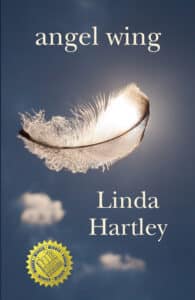
You recently won the Second Novel category at the Next Generation Indie Book Awards 2026 for your follow-up to The Broken Line, Angel Wing, congratulations! Can you tell us more about the book and what the award means to you?
 I’m thrilled to receive this award. To have my work recognised in an international competition feels very affirming and gives me more confidence in my fiction writing. It certainly encourages me to write more.
Angel Wing, the prequel to The Broken Line, tells the story of Ellen over three timelines: her ‘present-day’ journey (1955) to try to find the mother she had never known, had thought long-dead, until a letter arrived that suggested her mother, Liza, was still alive. On the way to Northern Ireland to search for Liza, Ellen has a car accident; as her life hangs in the balance flashbacks of her loveless childhood, and memories of her teenage years as an evacuee during WW2 come flooding to the surface.
The main story takes place during the war: Ellen makes friends with an abused village girl, a young Jewish boy escaped from Berlin after his parents were killed by the Nazis, and a wounded German pilot, Helmut, whose plane crashes in nearby woods. All four are young and traumatised, without parents or guidance in a world torn apart by war. Complex relationships develop and power dynamics are upended as Helmut finds himself at the mercy of the three children. Ellen, in her desperate need to feel loved and safe, develops a deep attachment to Helmut, which eventually leads her into danger.
Writing a second novel is often said to be more challenging than a debut. How did your experience of writing Angel Wing compare with writing The Broken Line?
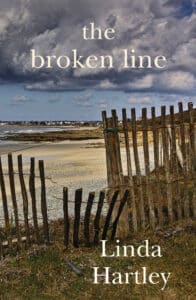
 The Broken Line is written from the perspective of Anita, Ellen’s daughter, and follows her journey through loss and trauma as she seeks to find the truth about her grandmother, Liza. As she uncovers Liza’s story, she understands how unhealed wounds have been passed down through the generations of her family, breaking the maternal line that Anita must now heal.
As I finished writing The Broken Line, I felt the absence of Ellen was such a strong presence in Anita’s story. I hadn’t intended to write a prequel when I began The Broken Line but immediately felt compelled to write Ellen’s story. Spontaneously the four main characters of Angel Wing emerged, along with a few key scenes. Beginning the second novel felt quite natural, necessary even, as if it was a story that needed to be told; the writing flowed, at times more easily than for The Broken Line.
Writing both novels was like a love affair for me! I couldn’t wait to finish my day’s work, or return from a period of travelling and teaching, to continue with the novels. Often waking in the early morning with a scene or passage needing to be written down, I immersed myself in the lives of these three women. There was some research too, which I found really interesting.
You write non-fiction, as well as fiction. What draws you to each form, and how does your approach differ between the two? Have they influenced one another?
It was my teenage dream to be a writer, but life led me down a different path. I had the great fortune to study Dance at Dartington College of Arts in the 1970s, where I could also take Creative Writing as a second subject. There were no Creative Writing degrees at that time.
My studies in dance led to training in somatic movement and psychotherapy, which then became the foundation of a fifty-year-long career as teacher, trainer and therapist. I was making intuitive choices to heal my own trauma, movement and dance helping me to come back into my body. Writing always wove through this work in movement and psychotherapy; I began writing my first non-fiction book one Sunday morning, after a long period of illness. I didn’t know until I sat down with notebook and pen that I was about to write a book! That first book (1995) has been translated into four languages and continues to sell within the somatic movement community, and perhaps beyond.
Most of my non-fiction writing is based on my work in somatic movement and psychotherapy. Gathering thoughts, ideas and information, formulating and organising them into a coherent form, feels deeply satisfying. When writing non-fiction I usually have a plan, beginning with a series of sections and chapter headings. I more or less know where I’m going and what I want to communicate, though of course there are turns and changes along the way.
With the novels I didn’t have a clear plan. I didn’t know exactly where they were headed – at some point the story would take off and find its own direction, leaving me wondering, “should I go along with this, or draw it back in, perhaps to somewhere safer?” Of course, I had to go with it – the story finds its own momentum. I love being in the moment when imagination takes over and creates new and often unexpected worlds. I think I was also processing a lot of my experiences as a therapist, digesting my own and my clients’ journeys through imaginative re-workings of difficult situations. In this way the fiction writing has felt healing.
It had always been my dream to write a novel, but only as I was approaching sixty (and realising I probably wasn’t ever going to ‘retire’) did I make time to begin The Broken Line. I love the non-fiction writing – it grounds and centres me – but this felt completely liberating – I could fly!
They very much influence each other: my years of somatic practice and psychological studies deeply inform the sensory and emotional content of the fiction; and the journey of learning about writing fiction, honing skills and writing style, have greatly enhanced my non-fiction writing.
You joined our Creative Non-Fiction: An Introduction online tutored course, led by Edward Parnell, in February 2026. What did you take away from the experience, and how has it influenced your writing practice or career?
In my last non-fiction book, Embodied Spirit, Conscious Earth, I felt I was touching on something a little new (for me), a closer weaving together of theory, practice, philosophical reflections and personal experience. The genre of Creative/Narrative Non-fiction resonated. I wanted to find out more about it, how to shape my books towards this, so I took the course with Ed. It’s still early days to say much about how it has influenced my writing practice and career, but Ed’s advice to “just start writing” has been very helpful! I’ve been exploring themes through my Substack posts (EarthBody Conversations), and since the course have taken some of these essays and begun applying what I learnt – even if they are just fragments, write them down, Ed suggested. I still haven’t found the narrative thread, but as with the fiction writing, I think I just need to step into the unknown and begin writing down what is arising, letting the narrative emerge.
What were the biggest benefits of studying on an online tutored course, particularly as a working writer?
The convenience of not having to travel or be bound by fixed times was a benefit. Exchanging thoughts and writing in the forum was interesting and fun, though I did miss meeting this interesting group in person.
Much of your work explores emotionally complex and sometimes difficult subjects. How do you look after yourself while writing about challenging experiences? Are there any practices, routines or sources of support that help you navigate that vulnerability?
As a therapist and teacher, I have always had to care for my wellbeing – this is central to what we learn in training. For much of my life I have had a morning meditative practice – sitting meditation, Tai Chi or yoga, or simply being with Nature. Before writing, I like to move – it might be an hour of practice in my studio, or a walk; this helps the writing to come from an embodied, rather than purely mental, place. Journal writing, time with family and friends, a community choir, cinema and theatre visits, reading, have all supported me – it’s important to keep in touch with life while writing. I also find the writing itself very healing.
Your writing often engages with women’s experiences and the legacy of the past. Why do you think stories of generational trauma continue to resonate so strongly with readers, in both fiction and non-fiction?
For a long time, therapists have been engaging with intergenerational trauma in their practice, but now there is much more awareness in the collective about the inherited impacts of unresolved trauma. We see the effects of it played out globally in terrible wars, oppression and abuse! As collective awareness grows, I think people inevitably want to understand and heal their own wounds; fiction and non-fiction can help deepen understanding. Healing initiatives are growing, amidst or because of the horrors we see taking place in the world.
You currently live in North Norfolk. How does the countryside and coastline influence your work?
I grew up close to the north-east coast so Norfolk feels like home, after many years of travelling. I need to be close to the sea; I feel most alive when walking that liminal space between land and water, solid structure and space. I think this is what we do as writers – inhabit a liminal space between what is tangible and known, and what is invisible and not-yet-known. The countryside here is also beautiful, softening the wildness of the ocean. I feel incredibly fortunate to have found my home here, where the open spaces and big skies support imagination and focus.
How has your interest in both dance and psychology influenced your writing?
My current teaching involves retreats in a contemplative movement practice that embraces dance, healing and spiritual practice. It teaches me to enter the unknown and stay present to whatever arises, and is a wonderful resource for writing. Dance, psychology and writing all find their place here.
Finally, what’s next for you?
In my writing and workshops, I’m exploring resonances between our bodies and their ‘symptoms’, and the way ‘symptoms’ of our distressed Earth and Nature are reflected in us. Hopefully this will be my next book.
Looking for support with your writing?
NCW Academy offers plenty of options for aspiring writers, from in-person workshops and evening courses, self-paced and tutored online courses, and mentoring.
Our online tutored courses, like the one Linda was a student of, begin in October 2026 and February/March 2027. Learn to write fiction and non-fiction, genre and memoir, with practical lessons, regular assignments and personalised feedback from your expert tutor.
Browse more from NCW Academy →

You may also like...
Case Study: Daryl Fraser
Novelist and former NCW student Daryl Fraser discusses winning the East Anglian Book Awards 2024’s Debut Novel category. Silver Harvest is a historical novel set in Lowestoft, Suffolk.

1st May 2026
How to evoke the past in your historical writing
In this article, Dr Breeze Barrington offers guidance on crafting vivid, immersive historical writing, including mindset tips, key questions, and writing prompts to help bring the past to life.
9th April 2026
Imogen Hermes Gowar recommends ten historical novels
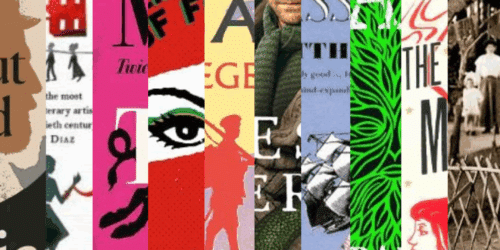
Ahead of our historical fiction course in September, Imogen Hermes Gowar shares ten of her favourite historical fiction books. From well-known classics to newer releases, local legends and as-seen-on-TV dramas, here are just a sample.
29th August 2025