




This online tutored course is designed to inspire and improve your writing about journeys, landscapes, places and people in both fiction and non-fiction. Led by Sunday Times bestselling writer Dan Richards, you will discover new ways to build and understand the power of place in your writing: you’ll relate to and rhapsodise about voyages, misadventures, pilgrimages and general wanderlust, whether in your own voice or that of your characters.
- Why do we go to unfamiliar regions?
- Which writers are most skilled at evoking place on the page and what can we learn from them?
- How can you engage readers and transport them to parts unknown, whether in fiction, memoir, narrative non-fiction or travel writing?
- How can we use personal reflection to better convey the spirit and feel of places, journeys and communities?
- Need we go far for novel experiences and poetic epiphanies?
- What are our responsibilities as travellers and authors – to the planet, to those we meet along the way, and to our readers?
Start date
Monday 22 March 2027
Location
Online
Length
Eight weeks (please see course schedule below)
Price
£300*
Dan Richards has designed the course to help you bring personality, energy, atmosphere and authenticity to your writing inspired by travel, place and the people encountered en route. With modules featuring non-fiction classics and globe-trotting thrillers, poetic explorations of rivers and mountains, literary fiction and works in translation, ‘The Narrative of Place’ also seeks to unpack what ‘travel writing’ means in 2027 and how its key tenets can enhance and energise your writing irrespective of genre.
Whether you’re a writer of creative non-fiction, memoir, journalism, or fiction, this eight-week programme contains elements and ideas to improve your ability to put the world on the page.
Halfway through the course, we will have a live talk and Q&A with award winning travel and nature writer Cal Flyn whose book The Savage Landscape was awarded the 2026 Wainwright Prize for Conservation Writing.
Dan will read and provide feedback on two written assignments, including up to 3,500 words of a manuscript in progress, and at the end of the course, you will have a 1-1 tutorial with him to discuss your writing and potential next steps.
If you took part in Dan’s recent Bringing Place to Life In Your Narrative workshop (October 2026), this is course is the ideal continuation, or it is perfect as a standalone course.
*Pay by instalments with Klarna, see more information below.
Not a UK resident? Drop us a line at academy@nationalcentreforwriting.org.uk to find out more about paying by instalment alternatives.
Course format
This course is delivered weekly (see course programme below). The majority of the content is presented in text form via Teachable, allowing you to progress through the material chapter by chapter at your own pace. You will submit two assignments directly to your tutor for personalised feedback and guidance, due at the end of week three and week six.
The course also includes up to two live Zoom sessions: a welcome session in the first module, followed by a one-to-one tutorial with your tutor later in the course.
Click to find out more about the course structure and the equipment you may need.

Course programme
Please note, the module order and/or content of the course may be subject to change.
Module one — What can we learn from travel writing?
The first module will act as a Travel Writing primer in which you will become familiar with key concepts, read a number of exemplars of the genre, and examine the various forms it can take. You’ll consider how the core skills used in good travel writing — observation, reportage, research — can be used in other genres, whether that’s creating moreish gastronomic odysseys; stories of derring-do; remembrance of a pilgrimage or celebrations of culture, art, or the natural world.
Module two — Enchantment
Humour, surprise, empathy and doubt, all of these feelings are symbiotic and intrinsic to the essential wonder of experiencing a new place or sensation. Week two will examine how elements of enchantment can elevate a piece of writing so that it inspires and lives for a reader.
Module two will also focus on ideas of exactitude, precision and accuracy when writing, the better to convey and summon verisimilitude and recognition in a reader.
‘Many people need desperately to receive this message: “I feel and think much as you do, care about many of the things you care about, although most people do not care about them. You are not alone.”‘ – Kurt Vonnegut, Timequake
Module three – Writing to a brief: distilling your ideas
Writing a narrative to a fixed brief is a vital skillset to master if you wish to publish work in newspapers, magazines or online. It’s something travel writers must be well versed in, but the skills apply to any kind of short-form writing steeped in place: short stories, personal essays, even chapters for long-form projects.
This module will include reading and analysing a number of short-form pieces as well as your first writing assignment, using and playing with the skills you will have gained so far in the course.
Module four — Wild Worlds
This module will explore ideas of wildness, once so important to the idea of adventure in both fiction and non-fiction — the imaginative excitement and speculative freedoms afforded by a great unknown; terra incognita — and ask whether writers still need to go to the extremities to tell novel, groundbreaking stories or whether narratives of equal weight and impact exist closer to home.
Amongst other books, ahead of your talk with travel writer Cal Flyn, we’ll focus on her recent book The Savage Landscape in which she travels to wild areas around the world to discover first-hand the human stories and histories embedded in them.
Module five — Giving place a voice
This week, and in light of our conversation with Cal Flyn, you will look at voice and narrative forms. In times past, a travel writer was often the main voice and character in their work – the reader’s guide. Today, a lot of great writing promotes the voices of people who live in the places visited and foregrounds their knowledge and perspectives.
This module will also explore the ways authors across genres can tell a tale and unpack a story — drip-feeding details or plunging readers straight into the mêlée of a narrative, giving a first-person perspective or deploying an omniscient ‘god’s eye view’.
Module six — Travelling inwards: personal reflection, memory and simile
In this module, you will explore answers to the question: ‘How can we use personal reflection to better convey the spirit and feel of places, journeys and communities?’ You’ll think about memory and the way recollected journeys and encounters, in all their uncanny dreamlike partiality and strangeness, offer possibilities in connection and recognition between writers and readers.
Inspired by the work of Alice Oswald, you’ll also discuss the power and possibilities of simile as a way to communicate these recollections. Throughout the course, Dan will be keen for you to consider that travel inwards can prove as equally creative as journeys out.
This week will include the start of the final writing assignment.
Module seven — Hybrid forms: digital and audio
To finish, you’ll revisit the possibilities that travel- or place-focused writing affords an author seeking to reach a broad and diverse readership. Whether you’re developing a travelogue, a personal essay or a novel steeped in place, there are many ways to connect with readers. You’ll consider how new mediums — from writer-led blogs, Substack newsletters and podcasts to immersive radio programmes, short stories and audio essays — can inform and enhance your message. What benefits can a fresh means of communication afford an author?
Module eight — Putting it all together
The final module will include a one-to-one tutorial with Dan when he will give you feedback on your written assignments.
This session will include a discussion of what you might do next with your writing, from setting goals and routines, to entering competitions, pitching travel pieces, and approaching agents and publishers.
Live sessions
There will be two live sessions for this course, which will take place over Zoom.
There will also be a live talk and Q&A with award winning travel and nature writer Cal Flyn around halfway through the course (also on Zoom) — date and time TBC.
Timings will be confirmed shortly.
Hear from former students
Meet the tutor
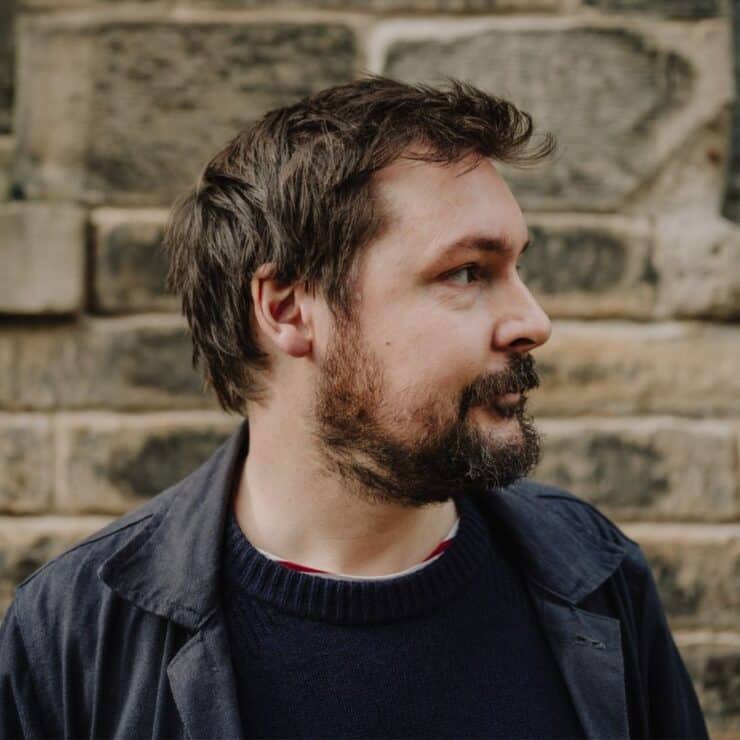
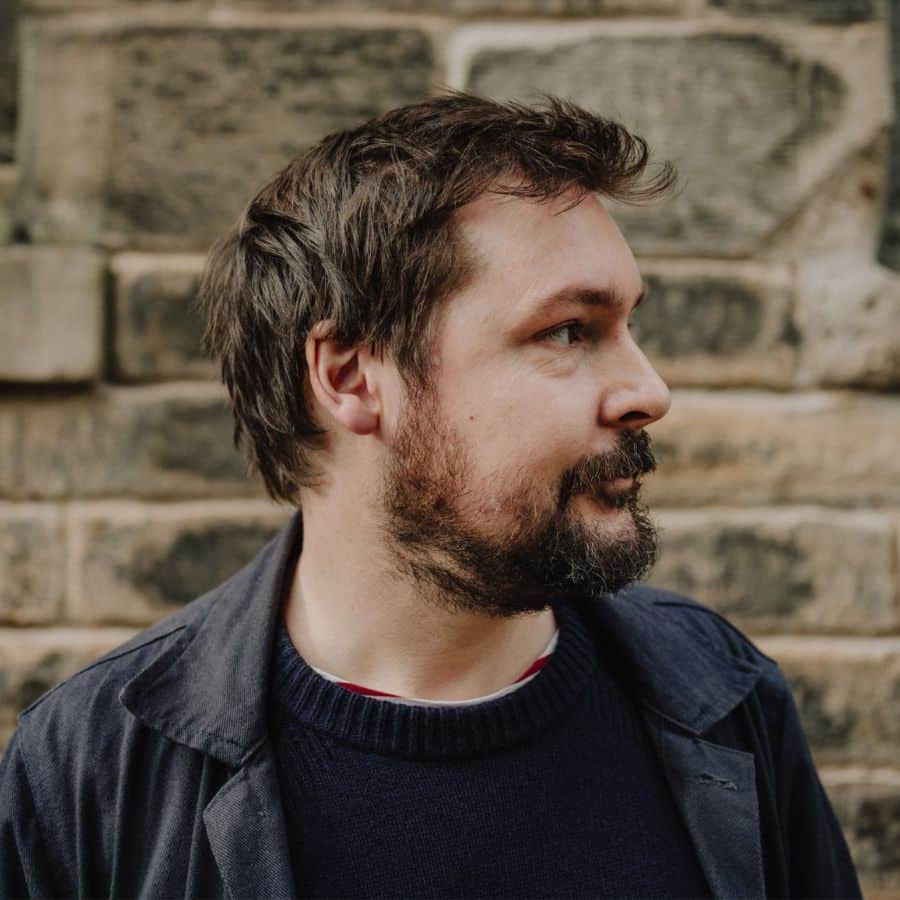
Dan Richards
Dan Richards is a writer and journalist who specialises in travel, memoir, and culture. His first book, Holloway, co-authored with Robert Macfarlane & Stanley Donwood, was a Sunday Times Bestseller. Overnight – an exploration of nocturnal operations which replenish, repair and protect the world whilst most of us are asleep – was published in 2024. He has written for newspapers and magazines including the Guardian, Economist, Monocle, and Telegraph.
Dan has taught at Bristol University, and currently tutors at NCW Academy, Moniack Mhor, and Arvon Foundation. He is an established chair and speaker at Edinburgh International Book Festival, Hay-on-Wye, and many others around the UK. Image © Owen Richards
Listen to Dan discuss the process of researching and writing creative non-fiction on our podcast →
Want to spread the cost? Pay by instalments with Klarna
Available to Google Pay and Apple Pay users only.
Make your writing journey more manageable with Klarna, available on our online tutored courses, workshops, evening courses and events. Choose to split the cost of your booking into three or four instalments, or spread payments over 30 days with Klarna’s flexible payment options. For more instructions, use the button below.


Writing narrative non-fiction with Dan Richards & Edward Parnell
In this episode of The Writing Life podcast, writers and NCW Academy tutors Dan Richards and Edward Parnell discuss the journey of writing narrative non-fiction.

17 June 2024
The spirit of place: Laurence Mitchell on Flint Country
In this episode of The Writing Life Podcast, Norfolk-based writer Laurence Mitchell reveals how he brought the spirit of landscape and place onto the page in his award-winning book, Flint Country: A Stone Journey.
24 August 2026

Writing creative non-fiction with Sonia Faleiro
Sonia Faleiro joins us to discuss The Good Girls: An Ordinary Killing, her new narrative non-fiction book which examines the killing of two teenage girls in India in 2014. Content warnings apply.
11 March 2021



Got a question?
If you still have questions, get in touch with the NCW Academy team by email academy@nationalcentreforwriting.org.uk or phone (+44) 01603 877177 between our working hours of 9am – 5pm BST, Monday to Friday. We’re here to help!