





Early bird discount will end on Monday 9 November at 10am GMT.
Inspired by history? Learn to tell exciting stories from the past.
Historical fiction is one of the most popular literary forms and one of the most varied. A historical novel can be a war-story, a romance, a whodunit, a tense socio-political drama, a quest or a pursuit. It can be a tightly focussed personal confession. It can be a wide-angled portrait of an era, with scores of characters (think of Hilary Mantel’s Wolf Hall). It can bring the past to life in vivid detail. It can be a medium through which we view our own society with extra clarity.
Historical fiction is a chance to tell stories afresh, to fill the silence of the archives with new voices. Achieving perfect historical accuracy isn’t possible or desirable — instead this is a course about the pursuit of authenticity, honouring the spirit rather than the letter of an era. On this course we’ll explore how playful and experimental historical fiction can be, and the ways in which contemporary writers push the boundaries of form, language and perspective. This is a genre as rich and as radical as we choose to make it.
This course is designed for beginners and anyone looking to write more consistently. Whether you’re just starting out or need guidance in developing a regular writing practice, during this historical fiction course, you will gain the essential tools and techniques to craft compelling period pieces.
Through a combination of inspirational lessons, engaging exercises, and practical assignments, you’ll learn how to create characters rooted in the past, tackle daunting topics and time periods, and find your unique voice. You’ll achieve real progress with one-to-one feedback from your tutor that is tailored to your writing. No generic responses — get specific, actionable advice from an expert.
This historical fiction course is ideal for those with no prior formal training who want to master the foundations of fiction writing. Your tutor will review up to 5,000 words of your writing, and at the end of the course, you’ll enjoy a one-to-one tutorial to discuss your progress and the next steps for your writing journey.
Start date
Monday 22 February 2027
Location
Online
Length
12 weeks (please see course schedule below)
Price
£495 £445* early bird discount
*Payment plans available. Drop us a line at academy@nationalcentreforwriting.org.uk to find out more.
Course format
This course is delivered across six fortnightly modules (see course programme below). The majority of the content is presented in text form via Teachable, allowing you to progress through the material chapter by chapter at your own pace. You will have two weeks to complete each module, after which you will submit an assignment directly to your tutor for personalised feedback and guidance.
The course also includes up to two live Zoom sessions: a welcome session in the first module, followed by a one-to-one tutorial with your tutor later in the course.
Click to find out more about the course structure and the equipment you may need.

Course programme
Module one – Find your story
In this opening module, you’ll explore what historical fiction is and what distinguishes it from other forms of fiction. You’ll also look at some fundamental questions that you’ll have to answer each time you sit down to write a piece of historical fiction: whose story is it, when does it take place, and where is it set? For your first assignment, you’ll write up to 1,000 words about a public historical event.
Module two – Voice
This module looks at the various forms of point of view and the ways they are useful in historical fiction. You’ll explore the two most popular choices, first and third person, and you’ll also look at narratives that contain multiple narrators. For this assignment, you’ll write a first-person narrative in which someone returns home after a long absence.
Module three – About Time
In this module, you’ll look at where to begin your story, and you’ll explore stories that have non-linear narratives. You’ll also look at the ways in which the time period you set your novel in can affect how much the reader might already know about the way life is going to unravel for your characters. In this assignment, you’ll look back on a turning point in history.
Module four – Work
In this module you’ll look at the ways the roles people have in your narrative help to cement it in its historical time period. You’ll read examples from popular historical fiction in which the work the characters do is integral to the narrative and structure of the novel, and for your assignment you’ll describe the daily working routine of a character in your chosen time period.
Module five – Hearts and Minds
This is a module focused on character. You’ve already begun to look at how perspective can shape a novel, but now you’ll look at the voice of your characters, and how their words, actions, and appearances can cement your reader into your chosen time period. You’ll also look into the minds of the characters and the wider society they exist in, and the ways in which a historical novel can help readers empathise with a past world, or feel alienated from it.
Module six – War
War has been one of the most popular topics for writing for centuries, and in this module you’ll look at the ways in which you can tackle this daunting topic in your narratives. You’ll read excerpts from stories that have war as a central theme, and rather than a final assignment you’ll have a 1-1 tutorial to discuss your writing and next steps.
Live sessions
There will be two live sessions for this course, which will take place over Zoom. Timings to be confirmed.
Hear from former students
Meet the tutor
Your tutor will review up to 5,000 words of your assigned writing, as well as providing guidance and support. You will also have a one-to-one tutorial with Imogen towards the end of the course to discuss your potential next steps.
Imogen Hermes Gowar
Imogen Hermes Gowar is the author of the bestselling novel The Mermaid and Mrs Hancock, which won a Betty Trask Prize and was shortlisted for the Women’s Prize for Fiction and the Sunday Times Young Writer Award. She’s published a variety of short fiction as well as an augmented reality walking tour of medieval Norwich, Eleanor. She’s particularly interested in how we write the past, and the dazzling variety of form and style that exists within the genre of historical fiction. Imogen has taught creative writing for Arvon, The Literary Consultancy, and The Novelry, among many others.
Image © Jamie Barrs
See Imogen’s thoughts on historical fiction and some tips for writing →

Want to spread the cost? Pay by instalments with Klarna
Available to Google Pay and Apple Pay users only.
Make your writing journey more manageable with Klarna, available on our online tutored courses, workshops, evening courses and events. Choose to split the cost of your booking into three or four instalments, or spread payments over 30 days with Klarna’s flexible payment options. For more instructions, use the button below.

Read more about how to write historical fiction
Expert tips, tricks and advice from established writers and NCW tutors.
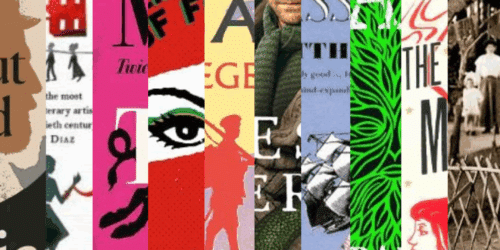
Imogen Hermes Gowar recommends ten historical novels
Ahead of our historical fiction course in September, Imogen Hermes Gowar shares ten of her favourite historical fiction books. From well-known classics to newer releases, local legends and as-seen-on-TV dramas, here are just a sample.

29 August 2025

How to evoke the past in your historical writing
In this article, Dr Breeze Barrington offers guidance on crafting vivid, immersive historical writing, including mindset tips, key questions, and writing prompts to help bring the past to life.
9 April 2026

The flesh and bones of historical writing
Imogen Hermes Gowar shares her thoughts on historical fiction and some tips on how to start your own history-inspired story.
4 August 2025

Rosie Andrews recommends… her top picks for gothic fiction
In this article, Rosie Andrews, author of The Leviathan and The Puzzle Wood, shares her book recommendations for gothic fiction ahead of her workshop on Saturday 16 November: Behind the Book with…Rosie Andrews.
1 November 2024

Case Study: Daryl Fraser
Novelist and former NCW student Daryl Fraser discusses winning the East Anglian Book Awards 2024’s Debut Novel category. Silver Harvest is a historical novel set in Lowestoft, Suffolk.
1 May 2026

Five essential research sources for your historical writing project
From physical archives to online databases, today’s writers have an abundance of historical resources at their fingertips. But with so many options, where should you begin?
16 July 2025



Got a question?
If you still have questions, get in touch with the NCW Academy team by email academy@nationalcentreforwriting.org.uk or phone (+44) 01603 877177 between our working hours of 9am – 5pm BST, Monday to Friday. We’re here to help!