





Early bird discount will end on Monday 9 November at 10am GMT.
Ready to bring your fiction to life?
Our 12-week online creative writing fiction course is designed for beginners and anyone looking to write more consistently. Whether you’re just starting out or need guidance in developing a regular writing practice, during this fiction course, you will gain the essential tools and techniques to craft compelling fiction.
Through a combination of inspirational lessons, engaging exercises, and practical assignments, you’ll learn how to create memorable characters, build captivating stories, and find your unique voice. You’ll achieve real progress with one-to-one feedback from your tutor that is tailored to your writing. No generic responses — get specific, actionable advice from an expert.
This course will cover…
- Building a writing habit: Learn how to establish a consistent writing routine and effectively utilise a writer’s journal.
- Character development: Discover how to create well-rounded characters and write credible dialogue that brings them to life.
- Exploring perspectives: Understand the impact of different perspectives on your writing and how to choose the right one for your story.
- Narrative structure: Find the ideal structure for your work to enhance its engagement and flow.
- Crafting beginnings and endings: Master techniques for compelling story openings and satisfying conclusions.
- Redrafting and self-editing: Delve into the essential steps of the redrafting process and learn effective self-editing techniques to refine your work.
This writing fiction course is ideal for those with no prior formal training who want to master the foundations of fiction writing. Your tutor will review up to 5,000 words of your writing, and at the end of the course, you’ll enjoy a one-to-one tutorial to discuss your progress and the next steps for your writing journey.
Start date
Monday 22 February 2027
Location
Online
Length
12 weeks (please see course schedule below)
Price
£495 £445* early bird discount
Course format
This course is delivered across six fortnightly modules (see course programme below). The majority of the content is presented in text form via Teachable, allowing you to progress through the material chapter by chapter at your own pace. You will have two weeks to complete each module, after which you will submit an assignment directly to your tutor for personalised feedback and guidance.
The course also includes up to two live Zoom sessions: a welcome session in the first module, followed by a one-to-one tutorial with your tutor later in the course.
Click to find out more about the course structure and the equipment you may need.

Course programme
Please note, the module order and/or content of the course may be subject to change.
Module one – Getting started
In this module, you will explore exercises to release your creativity and meet your tutor and fellow students. You’ll use the world around you to help generate ideas for stories, and you’ll get into the habit of writing daily in a writer’s journal. The assignment for this module is up to 500 words of the seed of a story.
Module two – Character
In this module, you will get to know your characters inside out and you will learn how to write credible dialogue. You will complete exercises to develop relationships between your characters, discover the importance of subtext, and observe strangers in the real world to generate writing material. The assignment for this module is up to 750 words in which you introduce a character into a scene.
Module three – Whose story is it, and who is telling it?
This module is a journey through perspectives and their impact on writing. You’ll read examples of writing in the first, second, and third person, and through a series of exercises, you’ll explore how your story changes depending on the point of view. The assignment is up to 750 words encouraging you to explore a new point of view in your writing.
Module four – Finding the story
This module is focused on structure and its impact on narrative. You’ll learn that finding the right structure can make even the simplest story engaging, you’ll analyse a short story using a structured framework and you’ll practise implementing this in your own work. The exercise for this module will ask you to produce a rough draft of your own story accordingly, in less than 700 words.
Module five – Making it better
In this module, you’ll get deep into the nuts and bolts of the redrafting and self-editing process. You’ll work on editing on a sentence-by-sentence level through a series of exercises, you’ll be led through the essential art of showing, not telling, and you’ll produce a piece of writing to share with a trusted reader. You’ll learn how to give and receive feedback, and you’ll produce a critical self-commentary on your own work.
Module six – Beginnings and endings
In this final module, you’ll explore different ways of beginning your story. You’ll learn how to hook a reader from the first word and you’ll compare opening paragraphs to analyse their effect. You’ll also learn how to end a story, comparatively looking at different techniques and methods in order to bring your narrative to its conclusion. The assignment for this module is a completed short story of up to 2000 words, accompanied by a short self-appraisal that takes into account everything you’ve learned in the course.
Live sessions
There will be two live sessions for this course, which will take place over Zoom. Timings to be confirmed.
Hear from former students
Meet the tutor
Tutor to be announced.
Your tutor will read and review up to 5,000 words of assigned writing. Throughout the course, you will receive considered, constructive feedback to help you keep improving your craft.
Want to spread the cost? Pay by instalments with Klarna
Available to Google Pay and Apple Pay users only.
Make your writing journey more manageable with Klarna, available on our online tutored courses, workshops, evening courses and events. Choose to split the cost of your booking into three or four instalments, or spread payments over 30 days with Klarna’s flexible payment options. For more instructions, use the button below.

Read more about how to write fiction
Expert tips, tricks and advice from established writers and NCW tutors.
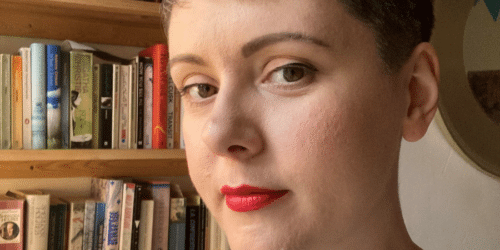
Finding your voice: how mentorship can transform your writing journey
How do writers benefit from ongoing mentorship and guidance? We spoke with Megan Bradbury about her experiences as an NCW tutor and mentor.

29 April 2025

The importance of setting in fiction
In this article, writer and NCW tutor Benjamin Johncock (The Last Pilot), argues that, when we fail to establish where and when things are happening, we break the spell. Explore why clarity, precision and specificity in setting aren’t optional — they’re essential.
19 August 2025

Five brilliant novel openings and what they teach us
In this article, Louise Tondeur explains how a strong opening chapter uses high stakes, mystery, and a unique premise to capture readers’ attention from the very beginning.
30 July 2026

Writing romantic relationships in fiction with Nicola Dinan
Novelist and NCW Academy tutor Nicola Dinan reflects on the role romantic relationships play beyond the romance genre.
2 August 2026

New ideas and how to grow them
‘Ideas are like frogs. They can be slippery beasts.’ In this article, NCW workshop leader and writer, Abi Hynes, offers some advice for wrangling writing ideas creatively when you don’t know what to do with them.
22 April 2026

Top tips for early drafts with Megan Bradbury
In this article, Megan Bradbury (author of Everyone is Watching) offers five pieces of advice to writers when on the early draft of a project.
24 August 2026


Got a question?
If you still have questions, get in touch with the NCW Academy team by email academy@nationalcentreforwriting.org.uk or phone (+44) 01603 877177 between our working hours of 9am – 5pm BST, Monday to Friday. We’re here to help!
Other fiction courses this term

An Introduction to Crime Writing (12-week course)
Explore the themes and appeal of crime fiction; looking at creating credible worlds and characters, developing and structuring story and building page-turning, tension-filled scenes. Led by Julia Crouch.
Monday 22 February

Develop Your Fiction (18-week course)
This fiction course deepens your writing skills, guiding you through more sophisticated techniques and diverse approaches to storytelling. You’ll experiment creatively, read widely, and emerge with a polished draft. Led by Megan Bradbury.
Monday 22 February

How To Write A Novel (eight-week course)
Learn to write a novel, explore the core elements of storytelling, and receive personalised feedback to confidently bring your first novel to life. Led by Okechukwu Nzelu.
Monday 22 March